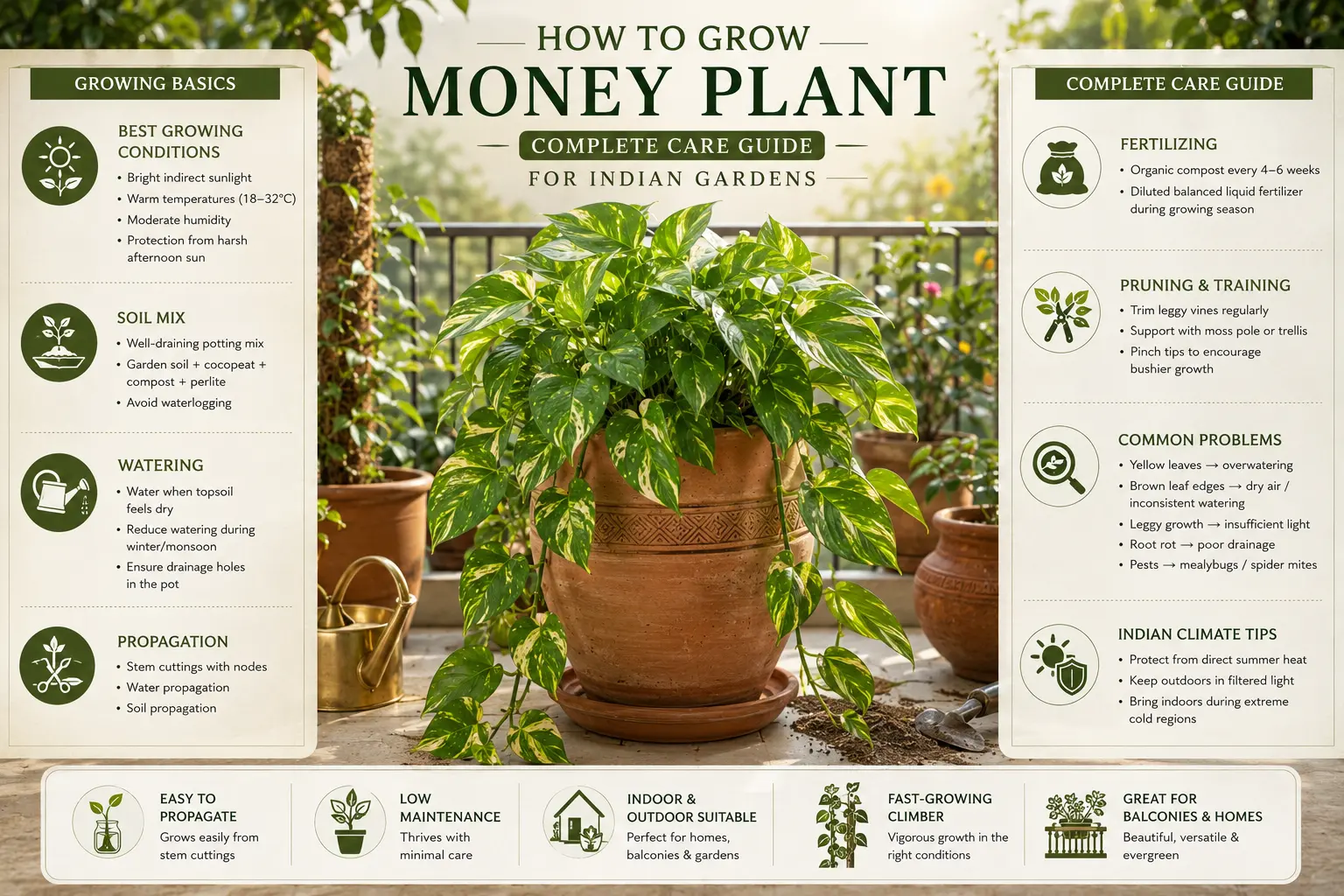
How Can You Grow Money Plant (Pothos): Complete Care Guide for Indian Gardens
Quick Answer: Money plant (pothos) is one of the easiest plants you can grow in India — in soil, water, or a hanging pot. It thrives indoors in indirect light and rarely complains. The most common mistake beginners make is overwatering it, not underwatering.
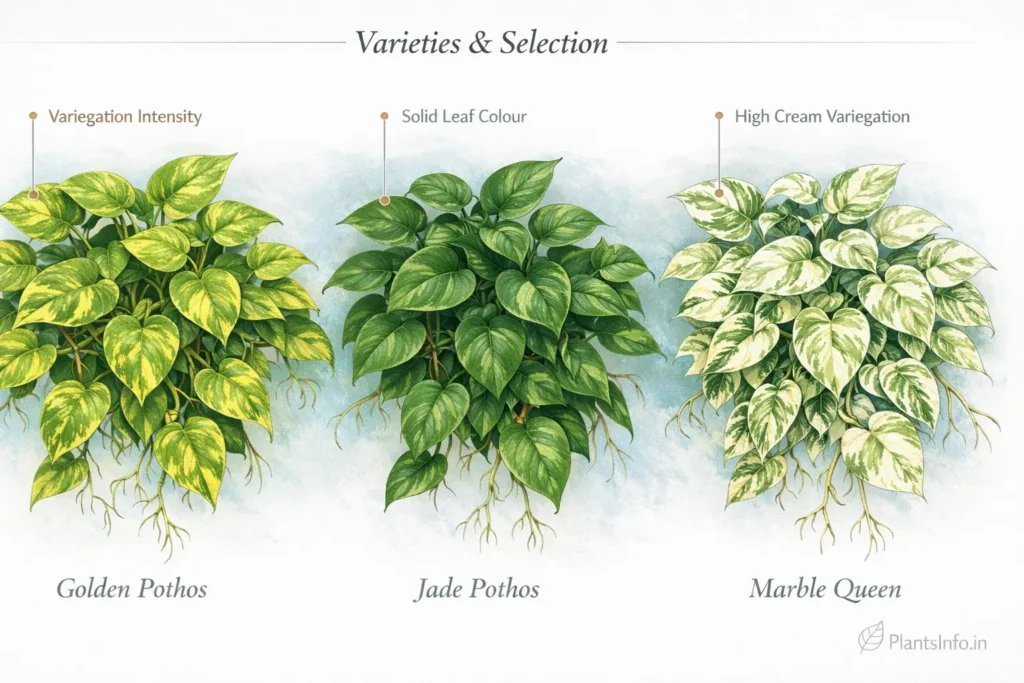
See also: Money Plant plant profile, common problems, its flowering season, its benefits, and its varieties.
Most people get their first money plant as a cutting from a neighbour’s pot — a few centimetres of vine dropped into a bottle of water, roots emerging within days. That near-magical ease is why this plant sits in almost every Indian home, office, and hospital corridor. It is genuinely hard to kill, genuinely low-maintenance, and — if you understand just a few basics — genuinely rewarding to grow well. It’s also one of the most versatile plants in Indian gardens.
Recommended Products
Disclosure: As an Amazon Associate, PlantsInfo may earn from qualifying purchases.
🌱 Growing Essentials
The following products can help with container gardening, potting, root development, soil management, and healthy plant growth.
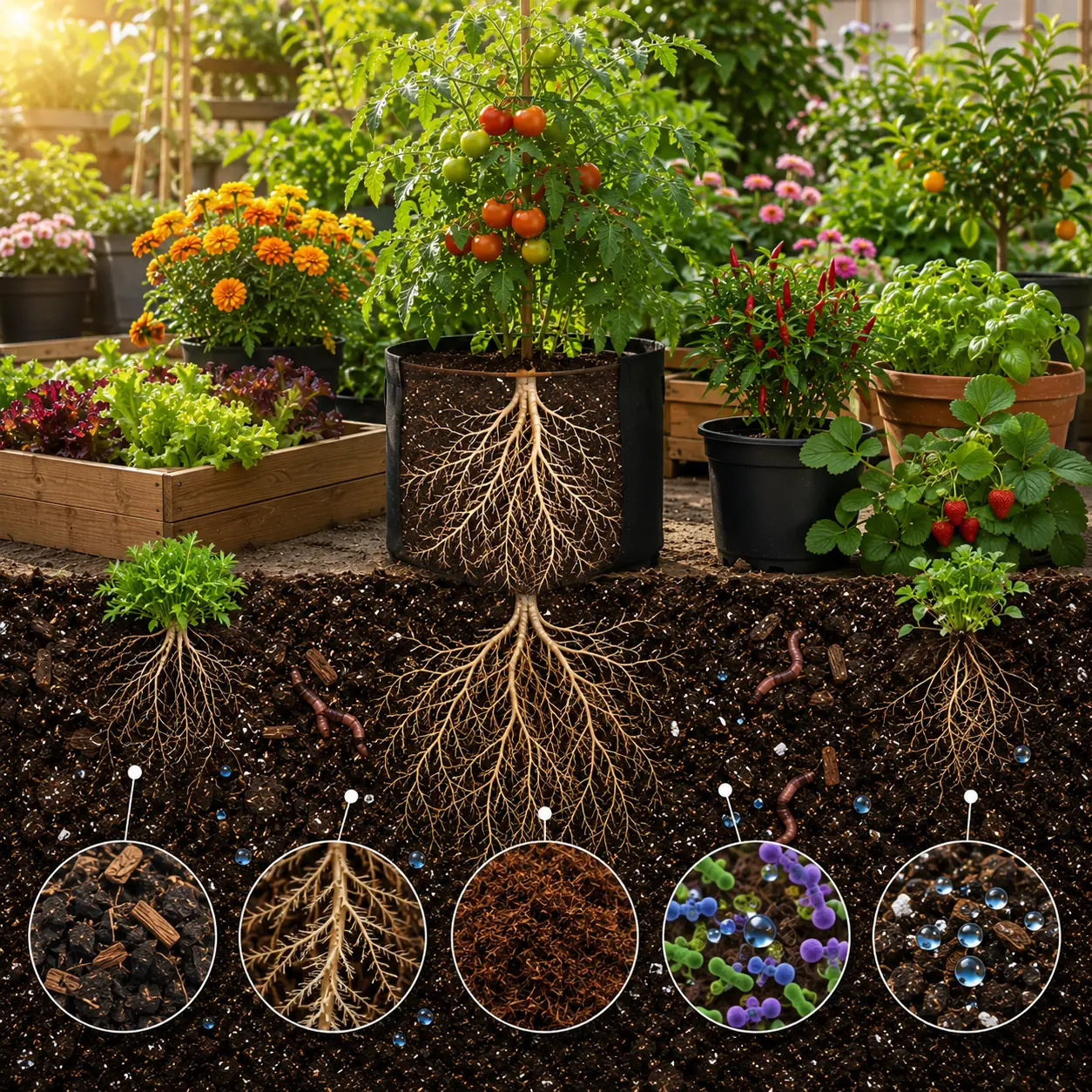
Organic Potting Soil Mix
Provides nutrients, structure, and healthy growing conditions for container plants.
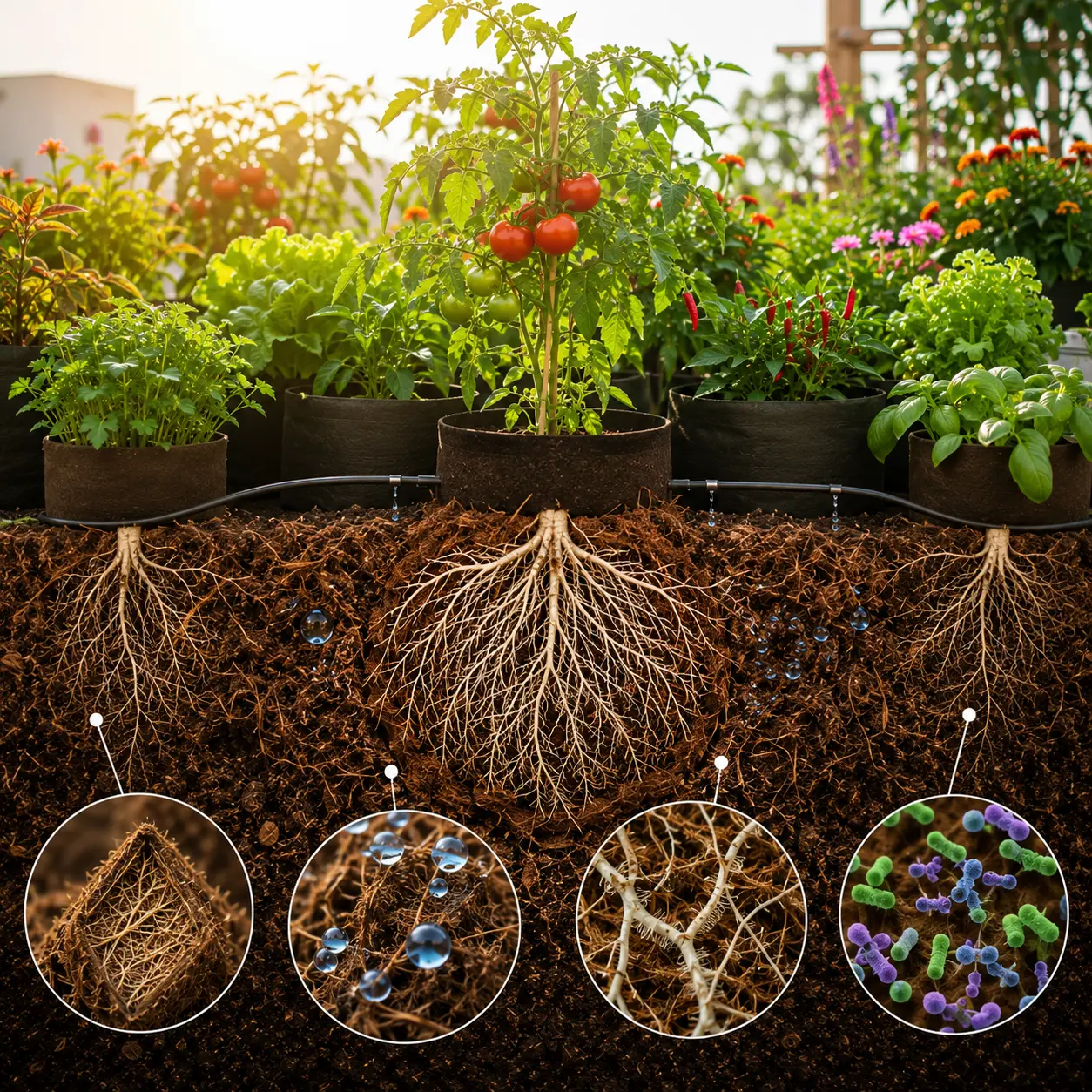
Coco Peat Growing Medium
Enhances moisture retention while maintaining excellent root-zone aeration.

Grow Bags for Plants
Improve drainage, root aeration, and vegetable production in limited spaces.

Plastic Pots for Plants
Ideal containers for seedlings, ornamentals, herbs, and balcony gardens.
Difficulty level: Easy
What beginners get wrong: They water it like a fern, on a fixed schedule, regardless of whether the soil is actually dry. That single habit causes more money plant deaths than anything else.
Quick Facts
| Attribute | Detail |
|---|---|
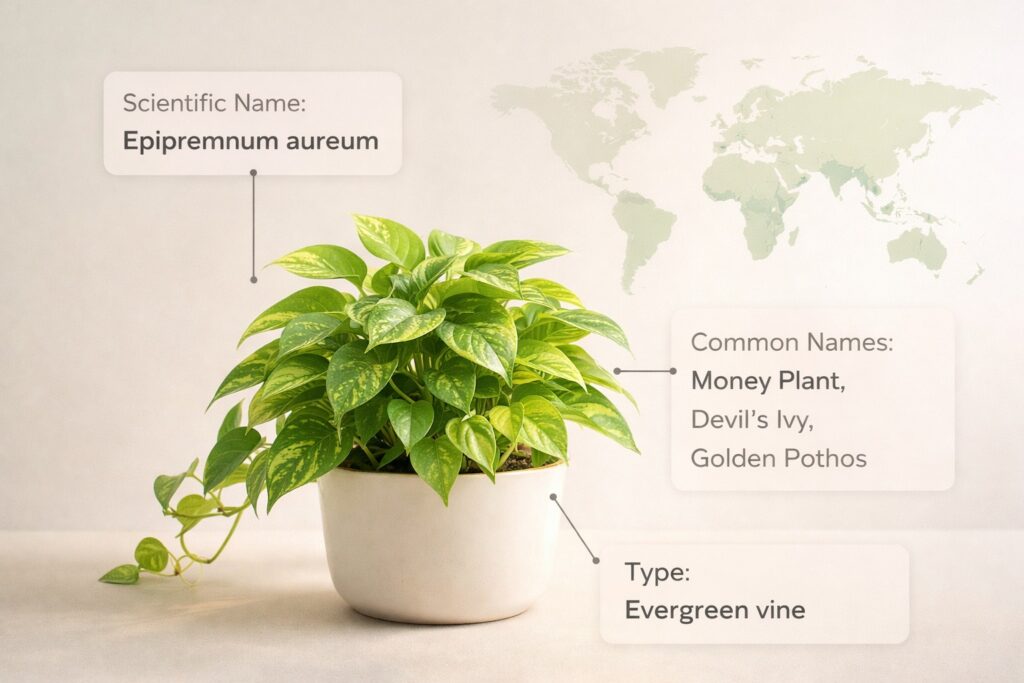
| Common names | Money plant, Golden pothos, Devil’s ivy, Mani plant |
| Scientific name | Epipremnum aureum (Araceae) |
| Plant type | Evergreen trailing/climbing vine |
| Mature size | Indoors: 1–2 m; outdoors/wild: can exceed 10 m |
| Sunlight | Bright indirect light; tolerates low light |
| Water needs | All Indian states thrive in warm, humid climates |
| Best season to plant | Monsoon onset or early winter |
| Suitable states | All Indian states; thrives in warm, humid climates |
Choosing the Right Spot
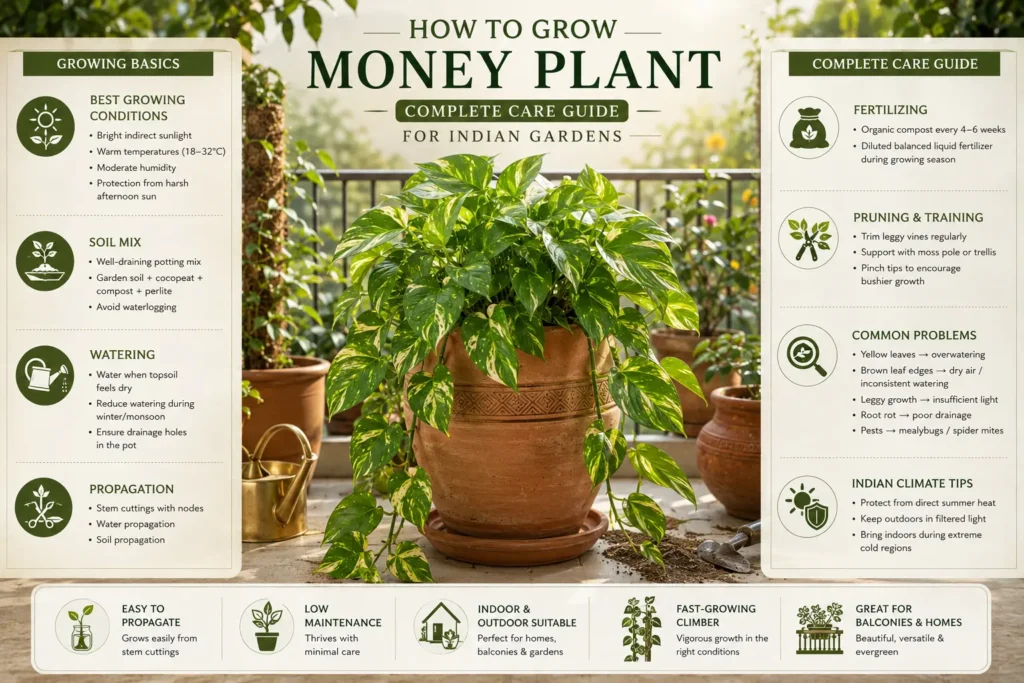
Money plant does best in bright, indirect light — think a spot near a window that gets filtered sun, not harsh afternoon rays. Direct sun, especially the west-facing afternoon glare common across north and central India, will scorch the leaves and fade the variegation.
For container growing, almost any well-draining pot works. It adapts equally well in soil pots, hanging baskets, or glass bottles of water. If you want the vines to trail dramatically, hang them from a balcony railing or hook them to a wall bracket. If you want it to climb up a moss stick or wooden post, it will readily do so.
Space from walls is not critical for small indoor plants, but outdoor plants trained on trellises need airflow to prevent fungal problems in humid monsoon months.
Soil and Potting Mix
Money plant is not fussy about soil, but it strongly dislikes soggy conditions. A well-draining mix is the single most important thing you can give it. A simple combination of regular garden soil, coarse sand, and compost (roughly 2:1:1) works well for most Indian homes.
If you are using potting mix from a nursery, add perlite or washed river sand to improve drainage. The ideal pH range is 6.0–7.0.
The common mistake: Indian gardeners often use heavy clay-based garden soil straight from the ground. This compacts in pots, holds water for too long, and leads directly to root rot — the number one killer of money plant in containers.
Planting — Season and Method
The best time to plant money plants in India is at the start of the monsoon (June–July) or in early winter (October–November). The warm, humid monsoon air gives cuttings the moisture and warmth they need to root quickly. Winter planting is slower but perfectly reliable.
Cuttings are far more practical than seeds. In fact, money plant rarely flowers or seeds in cultivation, so cuttings are the universal method. Take a stem cutting with at least two or three nodes (the bumpy joints on the stem), snip just below a node, and place it either directly in moist soil or in a bottle of water. Change the water every 5–7 days if propagating in water.
Planting depth: bury one node below the soil. Initial watering: water gently once after planting and then leave it until the soil is noticeably dry.
Watering
First 4–6 weeks: Water when the top 2–3 cm of soil feels dry — roughly every 5–7 days in summer, longer in winter.
Mature plants: Water only when the top layer of soil is completely dry to the touch. In a well-draining mix indoors, this is typically once every 7–10 days in summer, and once every 2–3 weeks in winter.
Overwatering sign that is NOT just “yellow leaves”: If the base of a stem turns soft, dark, and slightly mushy at soil level, that is root rot beginning — not a nutrient issue. This is distinct from the occasional older leaf yellowing from the bottom, which is normal.
Monsoon adjustment: In humid monsoon months, especially in coastal states like Kerala, West Bengal, and Goa, reduce watering to almost nothing for outdoor or semi-outdoor plants. Natural rainfall and humidity are more than enough.
Fertiliser
Money plant is a light feeder and will grow happily in a reasonable potting mix without any feeding for months. When you do fertilise, do it gently.
Best options in Indian markets:
- Vermicompost — half a handful per pot every 6–8 weeks, from monsoon through winter
- Mustard cake (sarson ki khali) solution — diluted in water (1 teaspoon per litre) once a month in the growing season
- Any balanced liquid NPK fertiliser (e.g., 19:19:19) diluted to half the recommended dose, monthly in summer and monsoon
Organic tip: A small amount of well-rotted cow dung compost mixed into the potting medium at planting time reduces the need for any additional feeding for the first season.
Common Problems and Fixes
1. Yellow leaves across multiple vines simultaneously. This is almost always overwatering or root rot — not a nutrient problem. Take the plant out of its pot, check the roots. Healthy roots are white or pale tan. Brown, slimy, foul-smelling roots mean root rot. Remove the affected roots, let the plant dry out for a day, and repot in fresh, dry mix.
2. Pale, washed-out leaves that lose variegation. The plant is not getting enough light. Move it to a brighter spot — but not direct sun. This is commonly misdiagnosed as a nutrient deficiency when it is purely a light issue.
3. Mealybugs — white cottony clusters on stems and leaf joints. Wipe them off with a cotton swab dipped in neem oil solution (a few drops of neem oil in water with a drop of dish soap). Repeat every 5–7 days for three weeks. Neem oil is widely available in Indian nurseries and is the most practical organic fix.
When Will You See Results?
Within 2–3 weeks of planting a cutting, you will see new leaves unfurling if the plant is in a bright spot. A well-cared-for money plant can produce several new leaves a month during the monsoon and summer.
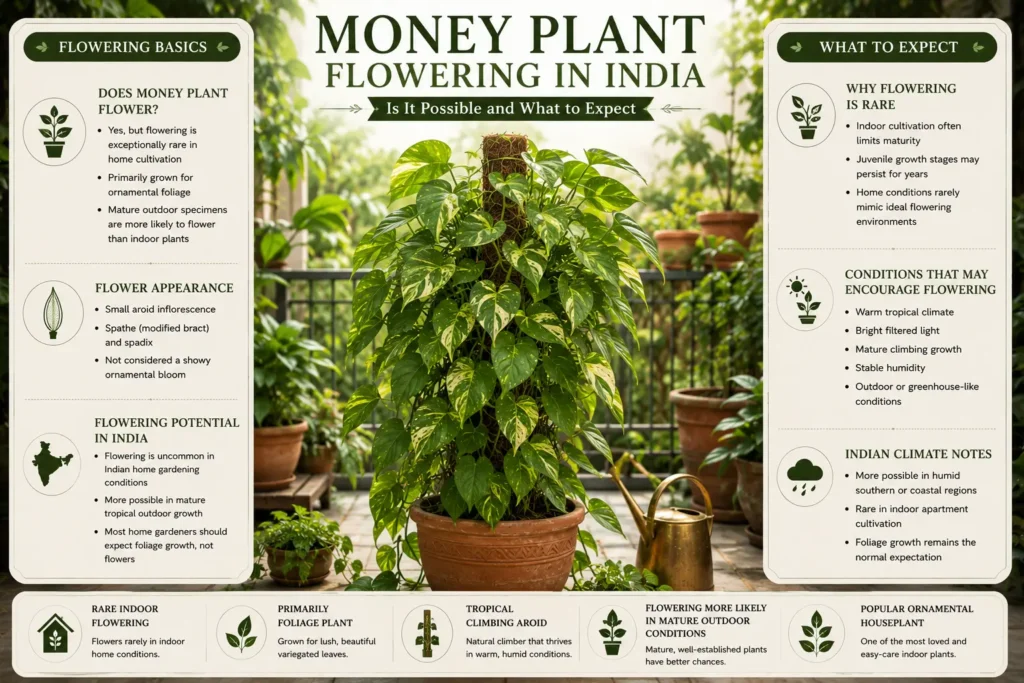
There is one thing money plants will almost certainly never give you: flowers. Due to a known genetic impairment, this species rarely, if ever, flowers in cultivation, anywhere in the world. Accept that, and enjoy it for its foliage — which, honestly, is the point.
This is one plant that genuinely rewards even minimal attention. If you do nothing more than give it indirect light and water it only when dry, it will grow steadily for years.