
How to Grow Pumpkin: Complete Care Guide for Indian Gardens
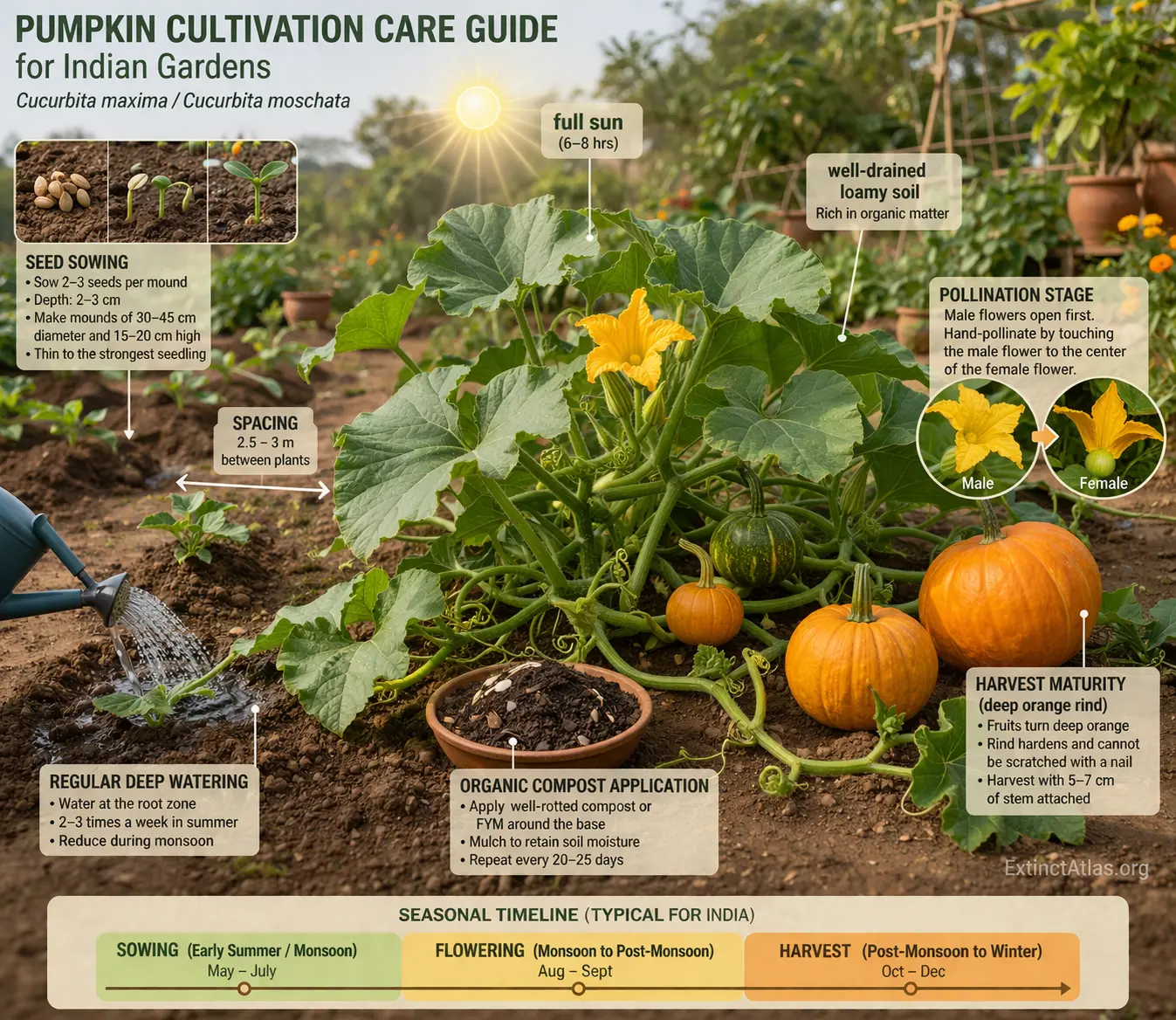
Quick Answer: Pumpkin is one of the easiest vegetables to grow in Indian home gardens. Sow seeds just before or at the start of monsoon, give the vines plenty of space and sunlight, and you can expect your first harvest within 90–120 days. The biggest mistake beginners make is underestimating how much space the vines need.
See also: Pumpkin Plant plant profile, common problems, its flowering season, its benefits, and its varieties.
A single pumpkin vine can run three to four metres in every direction — and it will, given half a chance. Indian gardeners have always known this, which is why pumpkins are traditionally trained over rooftops, boundary walls, and bamboo trellises rather than left to sprawl on the ground. Difficulty level: Easy. The most common beginner mistake is sowing in a container that is too small and wondering why the plant never sets fruit.
Recommended Products
Disclosure: As an Amazon Associate, PlantsInfo may earn from qualifying purchases.
🌱 Growing Essentials
The following products can help with container gardening, potting, root development, soil management, and healthy plant growth.
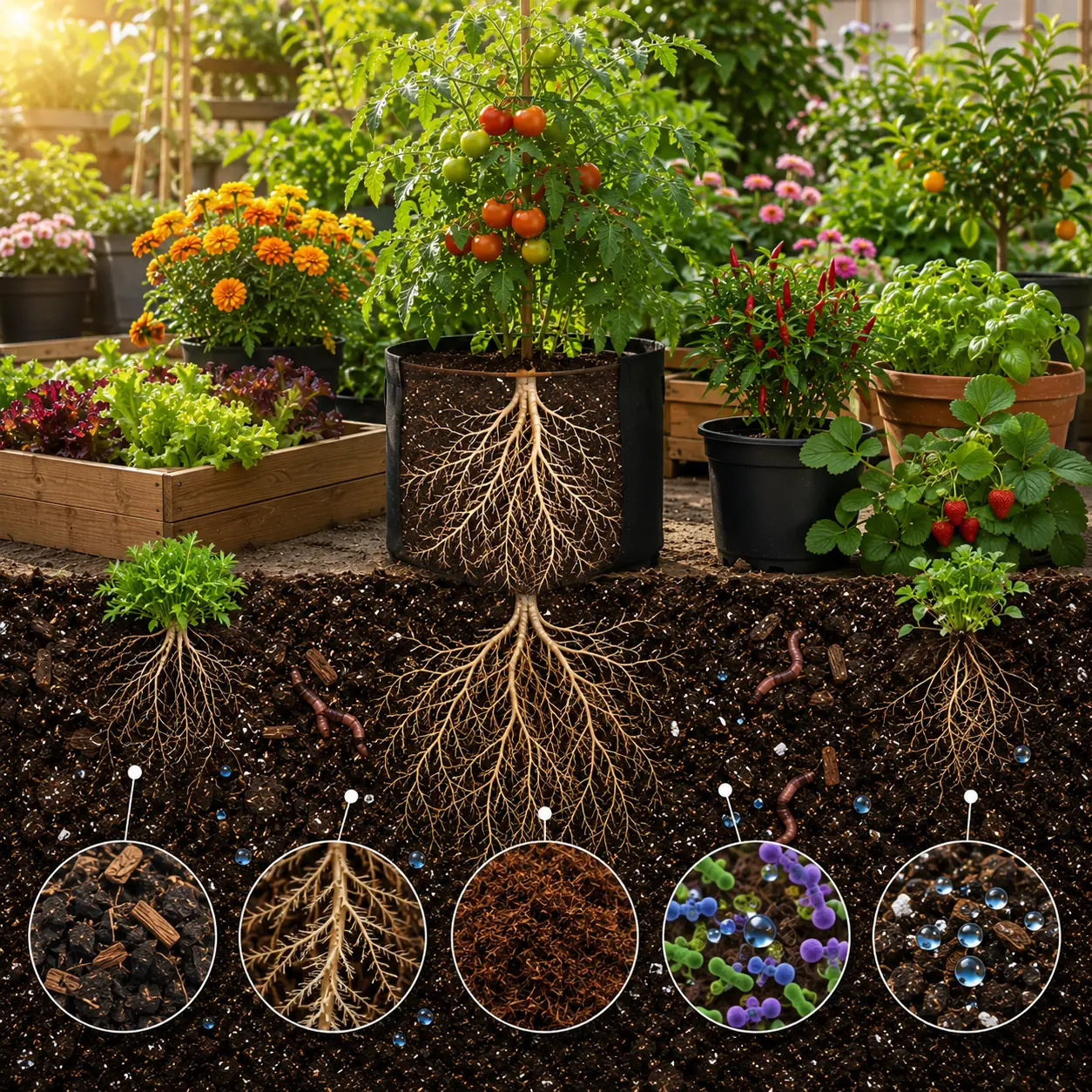
Organic Potting Soil Mix
Provides nutrients, structure, and healthy growing conditions for container plants.
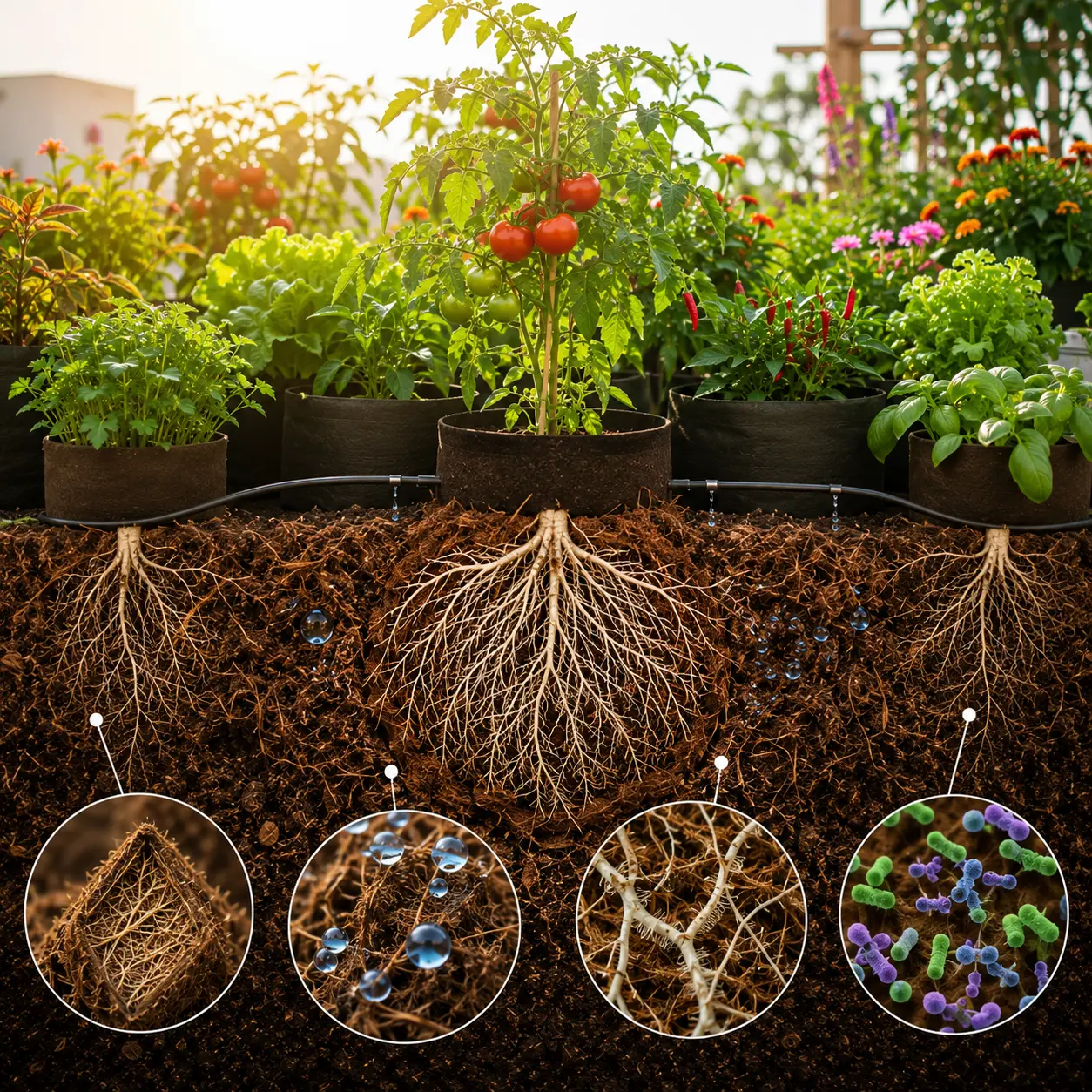
Coco Peat Growing Medium
Enhances moisture retention while maintaining excellent root-zone aeration.

Grow Bags for Plants
Improve drainage, root aeration, and vegetable production in limited spaces.

Plastic Pots for Plants
Ideal containers for seedlings, ornamentals, herbs, and balcony gardens.
Quick Facts
| Attribute | Detail |
|---|---|
| Common names | Kaddu, Sitaphal (Hindi), Kumro (Bengali), Mathanga (Malayalam), Parangi (Tamil), Lal Bhopla (Marathi) |
| Scientific name | Cucurbita moschata, C. maxima, C. pepo (varies by variety) |
| Plant type | Annual creeping vine |
| Mature size | Vines 3–5 m long; fruit 1–10 kg depending on variety |
| Sunlight | Full sun — minimum 6 hours daily |
| Water needs | Moderate to high; consistent moisture during fruiting |
| Best season to plant | Pre-monsoon (March–May) or early monsoon (June) |
| Suitable states | All of India; best results in UP, Bihar, West Bengal, Maharashtra, Karnataka, MP |
Choosing the Right Spot
Pumpkin is a full-sun plant. It needs at least six hours of direct sunlight daily — less than that and the vines grow vigorously but set very little fruit.
In North and Central India, an east- or south-facing open bed works best. In coastal and peninsular India, afternoon shade during peak summer is acceptable, but morning sun is non-negotiable.
Give vines room to run. A single plant needs at least 2–3 square metres of ground space, or a sturdy trellis of similar spread. Training vines vertically over a bamboo frame or a rooftop boundary wall is a traditional and effective approach — it also keeps fruit off wet soil, reducing rot.
Ground planting is strongly preferred over containers for full-sized varieties. Compact or bush varieties (such as some C. pepo types) can work in very large containers — minimum 50–60 litres —, but yield will always be lower.
Soil and Potting Mix
Pumpkin grows best in well-drained, fertile loamy soil with a pH of 6.0–7.0. It is a hungry feeder and rewards rich soil generously.
If your garden soil is heavy clay, mix in one part coarse sand and one part compost before sowing. If it is sandy and drains too fast, add vermicompost or decomposed cow dung to improve water retention.
The most common soil mistake Indian gardeners make is planting in unamended red laterite or black cotton soil without adding organic matter. Both soil types cause either waterlogging or rapid nutrient depletion, leading to yellowing leaves and poor fruit set.
For containers, use a mix of 40% garden soil, 40% vermicompost, and 20% coarse sand or perlite.
Planting — Season and Method
Best season: Pre-monsoon (March–May) in most of India. In South India, a second sowing window opens in September–October after the monsoon retreats.
Sow seeds directly where the plant will grow — pumpkin dislikes root disturbance. Sow 2–3 seeds per pit, 2–3 cm deep. Once seedlings emerge and establish (about 10–12 days), thin to the strongest one per pit.
Pit spacing should be at least 1.5–2 metres between plants to allow vine spread. Closer spacing leads to competition, poor air circulation, and higher disease incidence.
Water gently after sowing and keep the soil consistently moist — not wet — until germination, which typically takes 5–8 days in warm Indian conditions.
Starting seeds indoors is generally unnecessary in India’s warm climate. Direct sowing outdoors is faster and produces stronger plants.
Watering
First 4–6 weeks: Water every 1–2 days, keeping the top 5 cm of soil moist. Avoid waterlogging.
Mature plants: Water deeply every 2–3 days during the dry season. Pumpkin has moderate to high water needs when vines are actively growing and especially during fruit development.
A specific sign of overwatering to watch for: the base of the main stem turns soft, pale, and slightly mushy at soil level. This is crown rot, and it moves fast. Yellow leaves alone are not enough to diagnose overwatering — check the stem base first.
Monsoon adjustment: During heavy monsoon rains, ensure drainage channels are clear. Raised beds or mounds (the traditional madan or hillock sowing method) protect the root zone from waterlogging and are worth adopting even in home gardens.
Fertiliser
Pumpkin is a heavy feeder and responds well to both organic and synthetic inputs.
At sowing: Mix a generous amount of well-rotted cow dung or vermicompost into each pit — about 2–3 kg per pit. This sets up nutrition for the first month.
After vine establishment (3–4 weeks post-germination): Apply mustard cake solution or a handful of neem cake around the base of each plant. This supports vegetative growth and suppresses soil pests.
At flowering stage: Switch to a lower-nitrogen, higher-phosphorus and potassium feed. A light application of DAP (diammonium phosphate) or a 0:52:34 (MKP) solution supports flower and fruit development. Avoid heavy nitrogen at this stage — it pushes leaf growth at the expense of fruit.
Organic alternative: A weekly drench of diluted banana peel water (fermented for 2–3 days) provides potassium during the fruiting stage without the risk of overfeeding.
Common Problems and Fixes
1. Powdery mildew (white dusty coating on leaves). This is the most common pumpkin disease in India, especially in September–October when humidity is high after the monsoon. Spray a solution of 1 teaspoon of baking soda in 1 litre of water with a drop of neem oil. Repeat every 5–7 days. Remove severely infected leaves.
2. Fruit fly (Bactrocera spp.) Adult fruit flies lay eggs in developing fruit, causing internal rot. Wrap young fruit in cloth or paper bags as soon as they set. Yellow sticky traps placed near the canopy reduce adult populations. This is commonly misdiagnosed as a watering problem because the fruit appears healthy outside and rotten inside.
3. Poor fruit set/flowers dropping without setting fruit. Almost always a pollination problem. Pumpkin has separate male and female flowers. Male flowers appear first — often 1–2 weeks before female flowers — and drop naturally. If female flowers (identifiable by a tiny proto-fruit at the base) are dropping, the cause is either a lack of pollinators or overcast monsoon weather. Hand-pollinate by transferring pollen from a male flower to the centre of a female flower using a small brush or by touching the two together in the early morning.
Propagation
Pumpkin is grown exclusively from seed. Vegetative propagation is not practised for home growing.
Fresh, open-pollinated seeds are available at any kisan seva kendra or agri-input shop across India. Avoid saving seeds from hybrid varieties — they will not breed true.
For seed saving from open-pollinated varieties: allow one fruit to mature fully on the vine (it will turn deep orange, yellow, or tan depending on variety). Extract seeds, wash, dry in shade for 3–4 days, and store in a paper envelope in a cool, dry place. Viability is typically 3–4 years under good storage conditions.
Pruning and Training
Pumpkin vines do not need heavy pruning but benefit from guidance.
Once the main vine reaches 1–1.5 metres, pinch the growing tip to encourage lateral branching. More branches mean more potential fruiting points, although excessive branching without adequate nutrition leads to many small fruits.
Remove heavily diseased leaves, touching the soil, or blocking airflow at the centre of the plant. This is best done in the morning, so cut surfaces dry by midday.
If training over a trellis, tie the main vine loosely at intervals with soft cloth. Support developing fruit with a net bag or cloth sling tied to the trellis — heavy varieties like C. maxima can snap the vine stem if left unsupported.
Harvesting
Pumpkins are ready to harvest when the skin hardens, and the stem begins to dry and cork over. The colour shifts from bright green to the characteristic yellow, orange, tan, or dark green of the mature variety.
Thump the surface — a hollow sound indicates maturity. A fruit with a soft skin or a green, pliable stem needs more time.
Cut the fruit from the vine with a sharp knife or secateurs, leaving a 5–8 cm stem stub on the fruit. This stub significantly extends shelf life by slowing moisture loss from the fruit’s interior.
Do not pull the fruit off by hand — it damages the vine and often tears the stem from the fruit, reducing storage life to just a few days.
Storage: Whole, uncut pumpkins with intact stems store for 2–4 months in a cool, dry, well-ventilated spot. Cut pumpkin should be wrapped and refrigerated and used within 5–7 days.
Seasonal Protection
Summer stress: Pumpkin tolerates heat well but wilts visibly during afternoon temperatures above 40°C. Mulching the root zone with dry leaves or straw keeps the soil cool and reduces moisture loss. Avoid watering in the afternoon — it evaporates before reaching roots.
Monsoon risks: Excess moisture and poor drainage are the primary risks. Raised mounds, clear drainage channels, and good air circulation through the canopy reduce disease incidence significantly. Powdery mildew and bacterial wilt peak in the post-monsoon period.
No significant winter dormancy: In North India, frost will kill pumpkin vines outright. Time is running so harvest completes before November. In South India, winter growing is generally fine.
Key Takeaways
- Sow directly in the ground or a very large container in pre-monsoon (March–May) for best results across most of India.
- Pumpkin vines need at least 2–3 metres of running space — training over a trellis or rooftop solves most space problems.
- Male flowers appear and drop before female flowers — this is normal, not a problem.
- Hand-pollinate female flowers in the early morning if fruit set is poor, especially during overcast monsoon weather.
- Leave a stem stub when harvesting; it can extend shelf life from a few days to several months.
When Will You See Results?
Most Indian pumpkin varieties go from seed to harvest in 90–120 days. Vines will be visibly running within 3 weeks of sowing, and flowers typically appear at 5–7 weeks.
First fruit set can be expected around 7–9 weeks from sowing, depending on pollination success. The fruit then takes another 5–8 weeks to mature fully on the vine.
If you sow in March–April, your first pumpkins are ready by June–July. A second sow in June gives a September–October harvest — one of the most abundant in North and East India.
Pumpkin rewards patience at one stage only: waiting for the fruit to fully mature on the vine before cutting. Harvesting too early is the most common reason homegrown pumpkins lack the deep, sweet flavour of market ones.
Plant your seeds, give the vines room to roam, and the pumpkin will do most of the work for you — it is one of the most generous vegetables an Indian home garden can grow.


