Papaya Plant: Key Facts, Names, and What You Should Know
Quick Answer: Papaya (Carica papaya) is a fast-growing herbaceous plant native to Central America, now cultivated across tropical and subtropical India. It produces nutritious fruit within a year and is easy to grow in warm, well-drained conditions. Both ripe fruit and green fruit are widely used in Indian cooking and traditional medicine.
See also: Papaya Plant plant profile, how to grow it, common problems, its flowering season, and its benefits.
Most people assume papaya is a tree. It looks like one — tall, woody-looking trunk, spreading canopy, heavy fruit. But slice that “trunk,” and you’ll find it’s hollow and soft, more like a giant celery stalk than actual wood. This botanical quirk explains why papaya grows so fast, fruits so young, and collapses so suddenly when neglected or diseased.
Recommended Products
Disclosure: As an Amazon Associate, PlantsInfo may earn from qualifying purchases.
🌱 Growing Essentials
The following products can help with container gardening, potting, root development, soil management, and healthy plant growth.
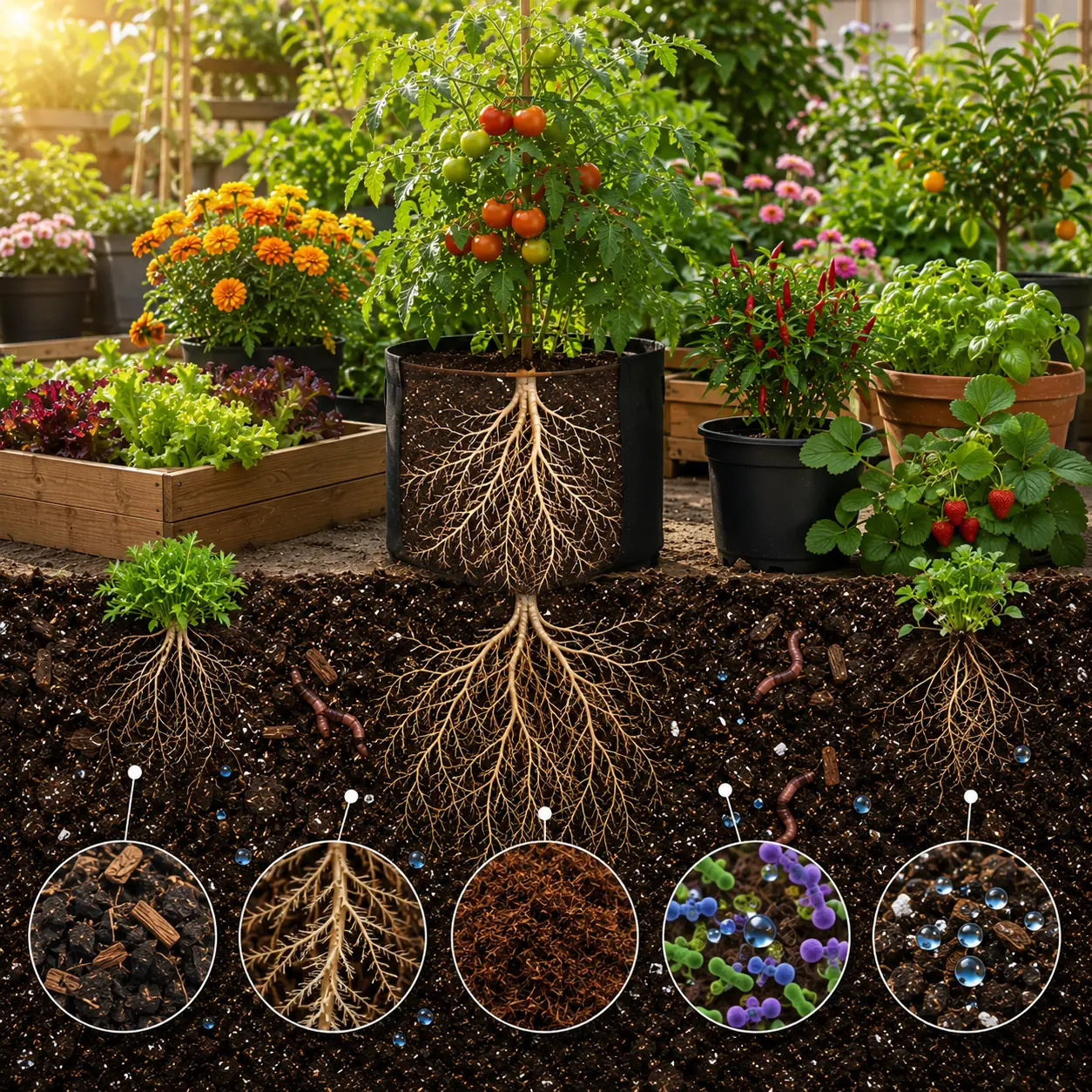
Organic Potting Soil Mix
Provides nutrients, structure, and healthy growing conditions for container plants.
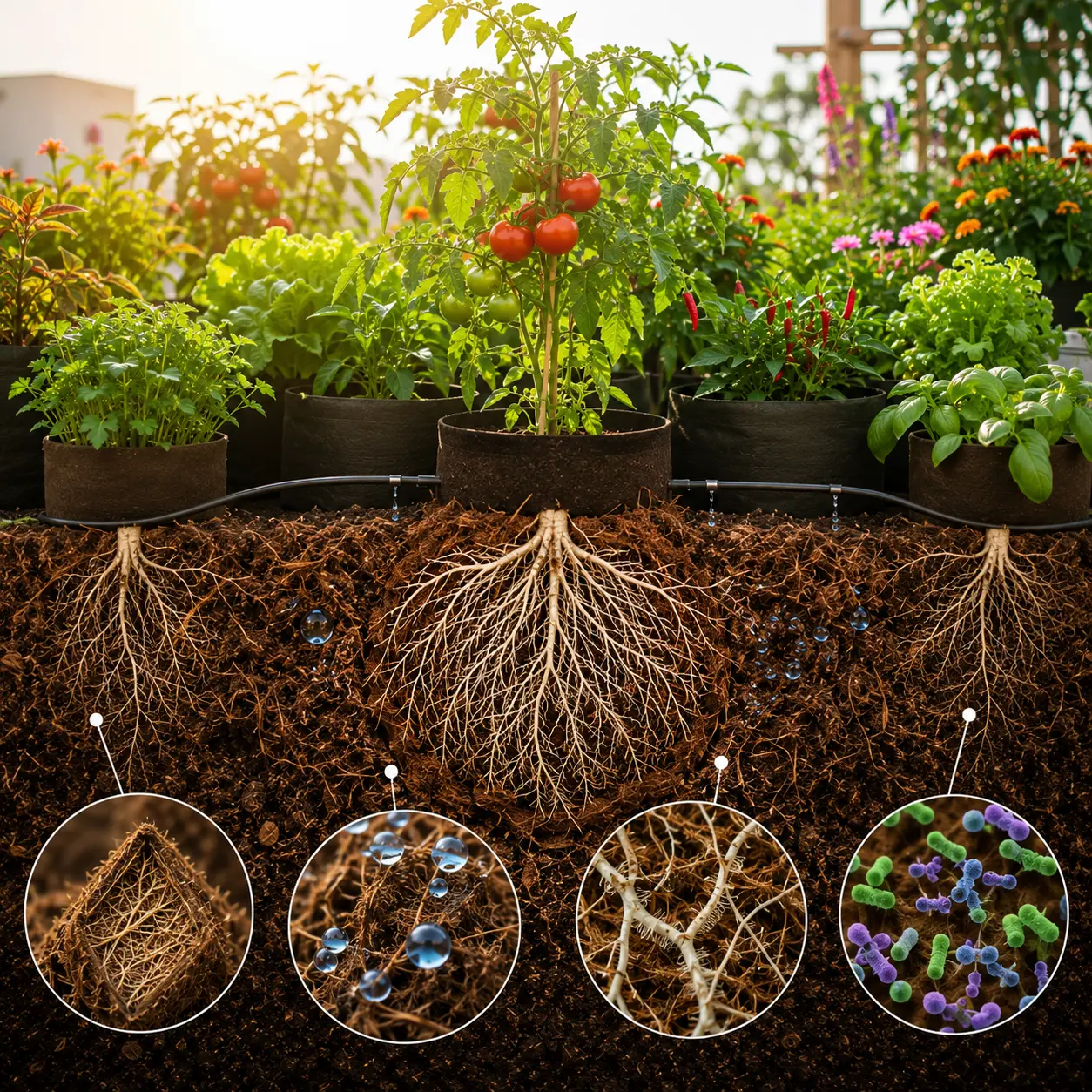
Coco Peat Growing Medium
Enhances moisture retention while maintaining excellent root-zone aeration.

Grow Bags for Plants
Improve drainage, root aeration, and vegetable production in limited spaces.

Plastic Pots for Plants
Ideal containers for seedlings, ornamentals, herbs, and balcony gardens.
Names in Different Languages
| Language | Name |
|---|---|
| English | Papaya, Papaw, Pawpaw |
| Hindi | Papita (पपीता) |
| Bengali | Pepe (পেঁপে) |
| Tamil | Pappali (பப்பாளி) |
| Telugu | Boppayi (బొప్పాయి) |
| Marathi | Papai (पपई) |
| Kannada | Parangi (ಪರಂಗಿ) |
| Malayalam | Omakka (ഓമക്ക), Kappanga (കപ്പങ്ങ) |
| Gujarati | Papaya (પપૈયા) |
| Punjabi | Papeeta (ਪਪੀਤਾ) |
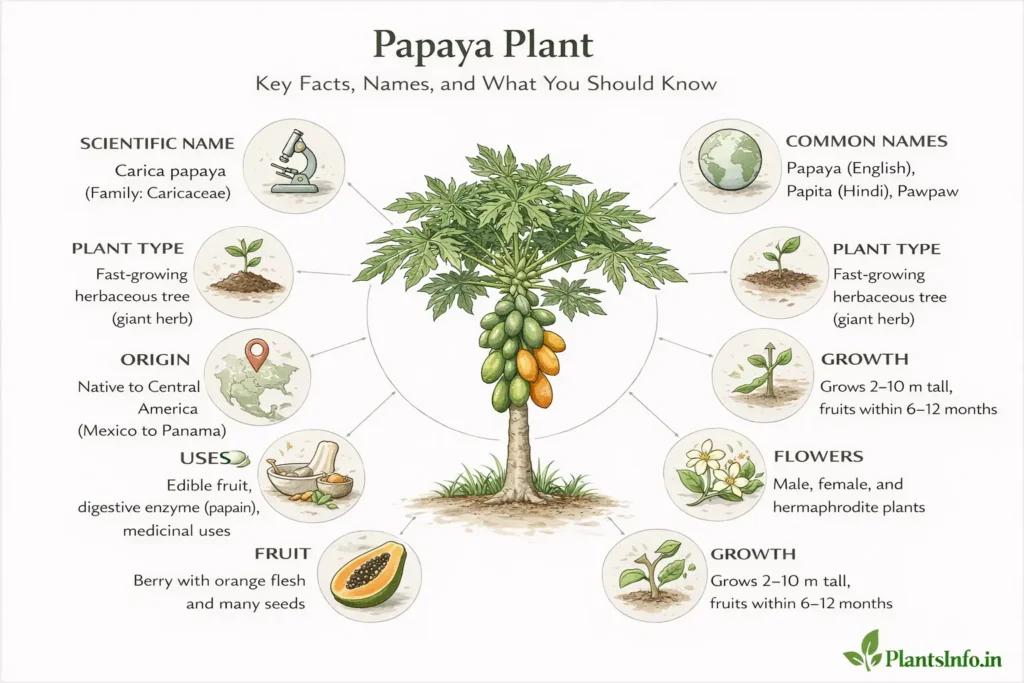
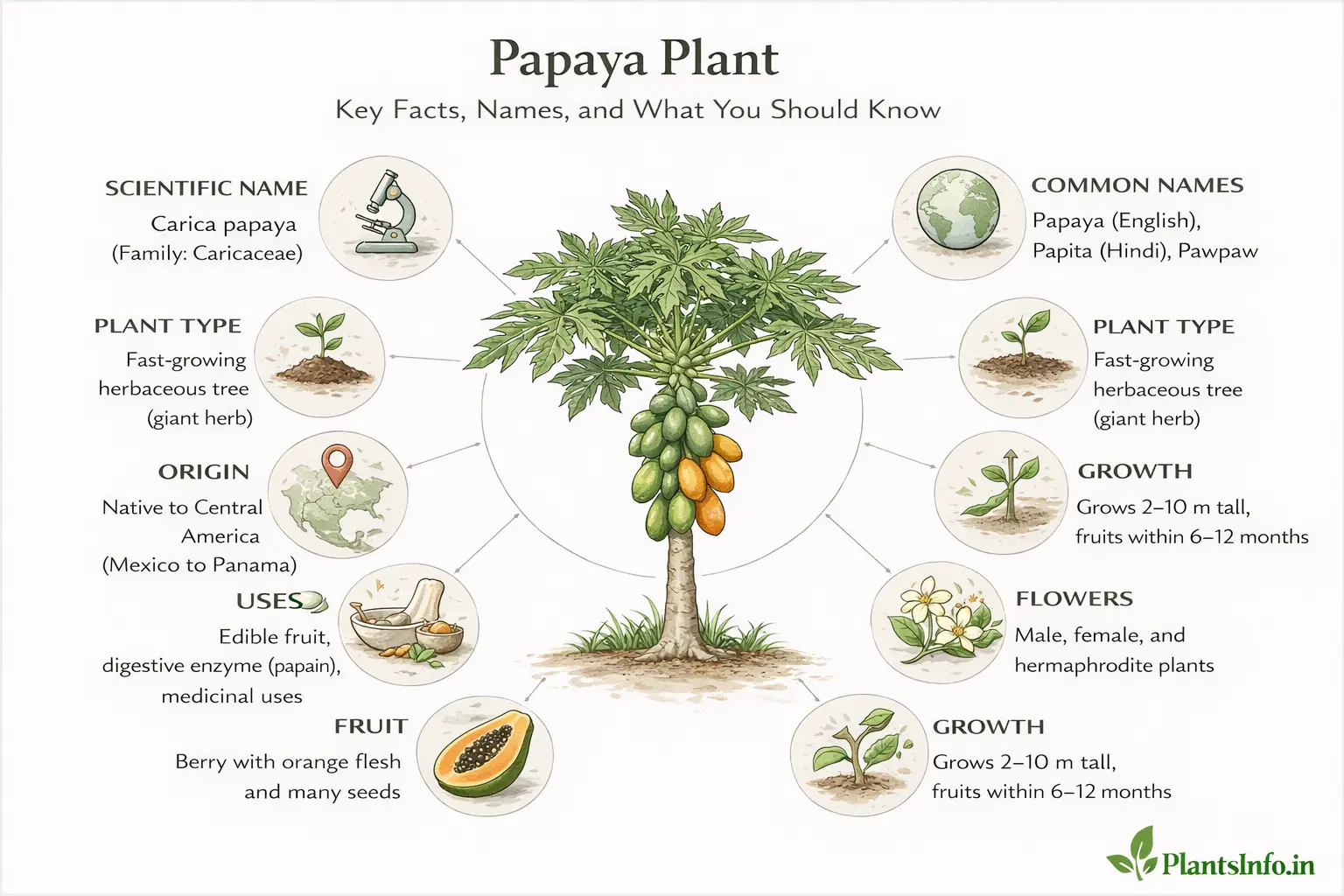
| Scientific name | Carica papaya |
| Family | Caricaceae |
Papita is the most searched term across North India. In South India, regional names dominate local searches.
What Does It Look Like?
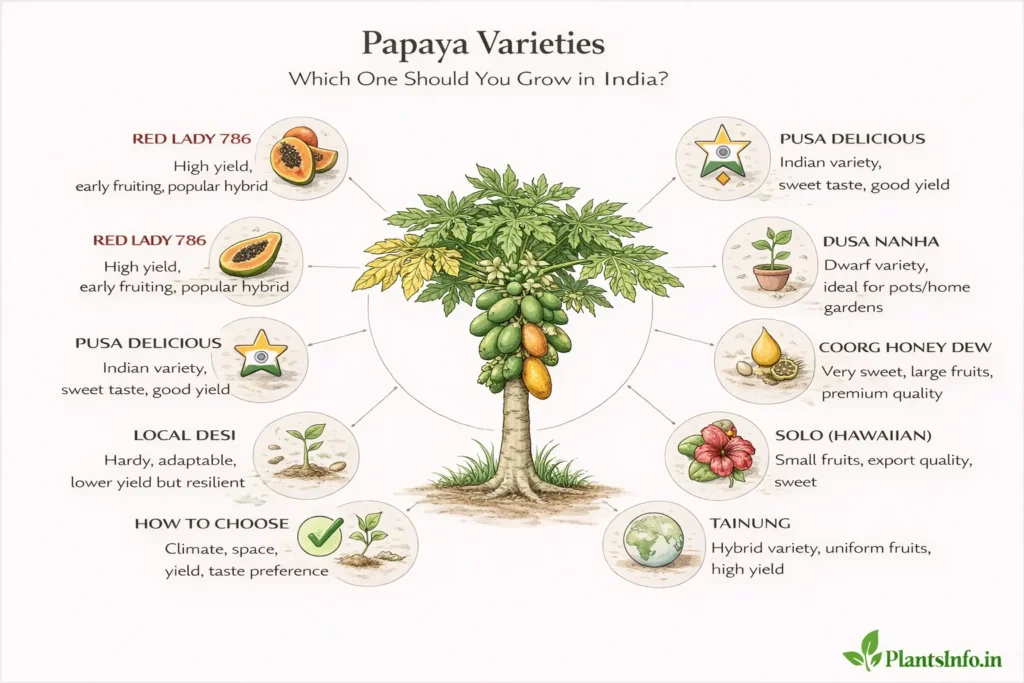
Mature papaya reaches 2–3 metres in dwarf varieties (Pusa Dwarf, Pusa Nanha), 4–6 metres in tall varieties (Taiwan Red, Coorg Honey). The plant rarely branches unless damaged or after completing a fruiting cycle. In rare cases, genetic variations or stress trigger multi-stemmed growth.
The “trunk” (technically a stem) is hollow, soft, and grey-green with prominent leaf scars forming a spiral pattern. It looks woody from a distance but feels soft and fibrous to the touch.
Leaves are large (50–70 cm diameter), deeply lobed with 7–9 divisions, and borne on long hollow petioles (leaf stalks) 60–100 cm long. They form a dense crown at the top of the plant. Leaves are dark green on top, lighter beneath, and have a slightly waxy texture.
Flowers vary by plant sex. Female flowers are large (4–5 cm), pale yellow, solitary or in small clusters, and grow directly from the stem near the leaf axils. Male flowers are smaller (1–2 cm), borne in long drooping panicles (branched clusters) 60–100 cm long. Hermaphrodite flowers — found in some varieties and environmental conditions — combine male and female parts and produce the best-quality fruit.
Fruit shape and size depend on variety and flower type. Typical fruit is oblong to pear-shaped, 15–30 cm long, 10–20 cm in diameter, and weighs 500 grams to 3 kg. Skin is green when unripe, turning yellow-orange to deep orange-red when ripe. Flesh is orange (most varieties), red (Taiwan Red, Red Lady), or yellow (some older cultivars). The central cavity contains 200–300 small, round, black seeds covered in a gelatinous coating.
One unmistakable visual detail: The leaf scars on the stem create a distinctive spiral pattern that identifies papaya even from a distance when leaves have fallen.
Where Does It Grow in India?
Papaya is not native to India. It originates from southern Mexico and Central America, introduced to India by Portuguese traders in the 16th century. It naturalised rapidly and is now cultivated commercially and in home gardens across almost every state.
Most common states for commercial cultivation: Andhra Pradesh, Karnataka, Tamil Nadu, Gujarat, Maharashtra, Bihar, Uttar Pradesh, and West Bengal. Andhra Pradesh and Karnataka are the largest producers.
Papaya thrives in tropical and subtropical climates with temperatures between 25–35°C. It grows from sea level to approximately 1,500 metres in elevation. Above that altitude, growth slows, flowering delays, and fruit quality declines. It’s rarely seen in high-altitude regions like Himachal Pradesh, Uttarakhand hills, or Kashmir.
The plant is ubiquitous in both urban and rural settings. In cities, it’s one of the most common backyard fruit plants due to fast maturity and small space requirements. In rural areas, it’s grown as a cash crop and intercropped with vegetables, bananas, or coconut.
Coastal regions (Kerala, Goa, coastal Karnataka, Odisha) provide ideal conditions — warmth, humidity, and year-round growing potential. In North India (Punjab, Haryana, Delhi), papaya grows successfully but experiences slower winter growth and occasional frost damage to young plants.
What Is It Used For?
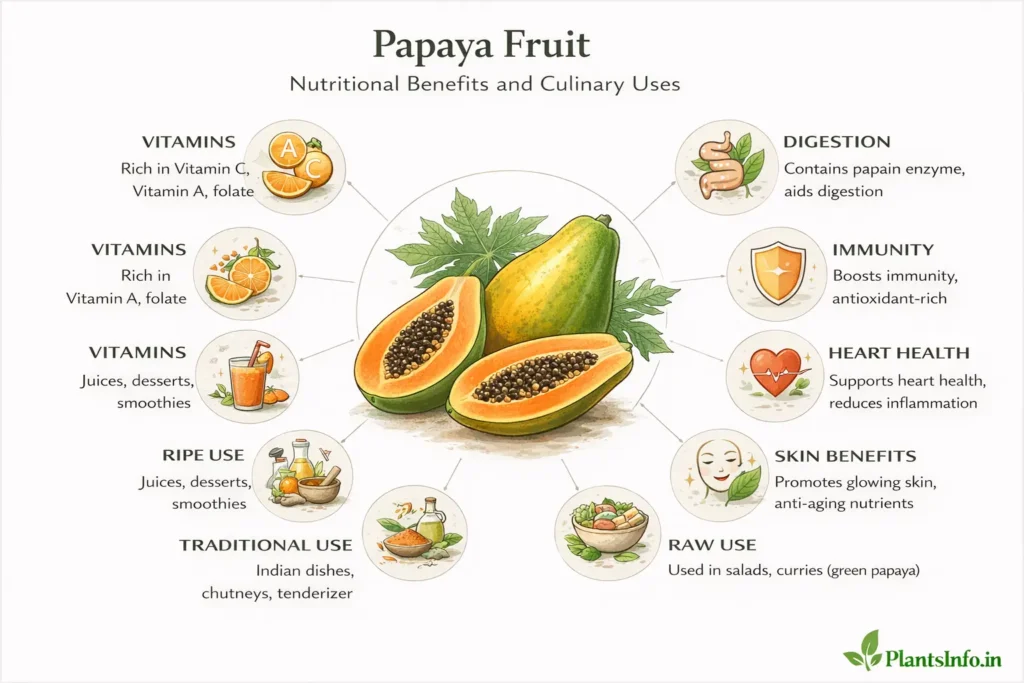
- Fresh fruit consumption: Ripe papaya is eaten fresh across India, valued for its sweet flavor and digestive benefits due to the enzyme papain.
- Culinary vegetable: Green (unripe) papaya is cooked as a vegetable in Kerala, Tamil Nadu, Karnataka, and parts of North India, used in curries, stir-fries, and sambar.
- Digestive aid: Papaya’s enzyme content makes it a traditional remedy for constipation, bloating, and protein indigestion.
- Meat tenderiser: Green papaya latex and dried powdered fruit are used to tenderise tough cuts of meat in home and commercial cooking.
- Traditional medicine: Papaya leaves, seeds, and green fruit are used in Ayurvedic and folk medicine for conditions ranging from intestinal parasites to menstrual irregularities.
- Cosmetic applications: Papaya pulp is applied to skin for exfoliation and wound healing, while papain is used in commercial skincare products.
Is It Easy to Grow?
Honest answer: Yes, papaya is easy to grow in most Indian conditions, provided you meet two non-negotiable requirements — full sun and well-drained soil.
It tolerates poor soil, irregular watering, heat, and humidity far better than most fruit trees. It fruits faster than any tree crop you can plant (8–10 months from seed to first harvest). Space requirement is minimal — a single plant fits comfortably in a 2×2 metre area.
The difficulty arises from its vulnerabilities: papaya is extremely sensitive to waterlogging (root rot kills the plant in days), highly susceptible to viral diseases spread by aphids (papaya ringspot virus has no cure), and short-lived (productivity drops after Year 3). In areas with heavy clay soil or poor drainage, growing papaya requires significant soil amendment or raised beds.
Climate suitability: Excellent in tropical and subtropical India (all southern states, coastal areas, plains of North India). Marginal in high-altitude or frost-prone areas above 1,500 metres.
⚠️ Special flags:
- Not invasive — Papaya self-seeds readily from dropped or bird-dispersed fruit but is easily controlled. It does not form thickets or displace native vegetation.
- Toxicity: Green (unripe) papaya and latex are toxic to pregnant women due to compounds that stimulate uterine contractions. Ripe fruit is safe. Papaya latex causes skin irritation in some individuals; handle with gloves. Seeds in large quantities (more than 10–15 daily) may cause digestive upset and, in animal studies, reproductive effects.
- Papaya ringspot virus (PRSV) is endemic in India. Once infected, plants must be removed and destroyed. No chemical treatment exists. Viral resistance is the primary breeding focus for modern varieties like Pusa Dwarf and Red Lady.
- Commonly confused with: Pawpaw (Asimina triloba), a completely different species native to North America with similar common names. True pawpaw does not grow in India.
Frequently Asked Questions
Is papaya safe for dogs and cats?
Ripe papaya flesh is safe for dogs in small quantities (1–2 tablespoons) and may aid digestion, but seeds are toxic to dogs and should never be fed. Cats show little interest in papaya and may experience digestive upset if they consume it. Green papaya and latex are toxic to both species.
Can I grow papaya from seeds of store-bought fruit?
Yes, with caveats. Hybrid varieties (Red Lady, Taiwan Red) often produce seeds that germinate but may not produce fruit identical to the parent. Germination rate is 60–80% for market fruit. Plant 3–4 seeds per spot to account for male plants, which do not fruit.
Why does my papaya have flowers but no fruit?
You likely have a male plant. Male plants produce only pollen-bearing flowers on long panicles and never set fruit. Female and hermaphrodite plants set fruit. Sex is determined genetically and cannot be changed. Plant multiple papayas to ensure at least one female or hermaphrodite, or buy sexed saplings from nurseries (though even these are not always guaranteed).
Conclusion
Papaya combines rapid growth, high nutritional value, and wide adaptability. It’s a practical choice for home gardens across most of India, delivering fruit within a year while tolerating the heat and space constraints that challenge other crops.