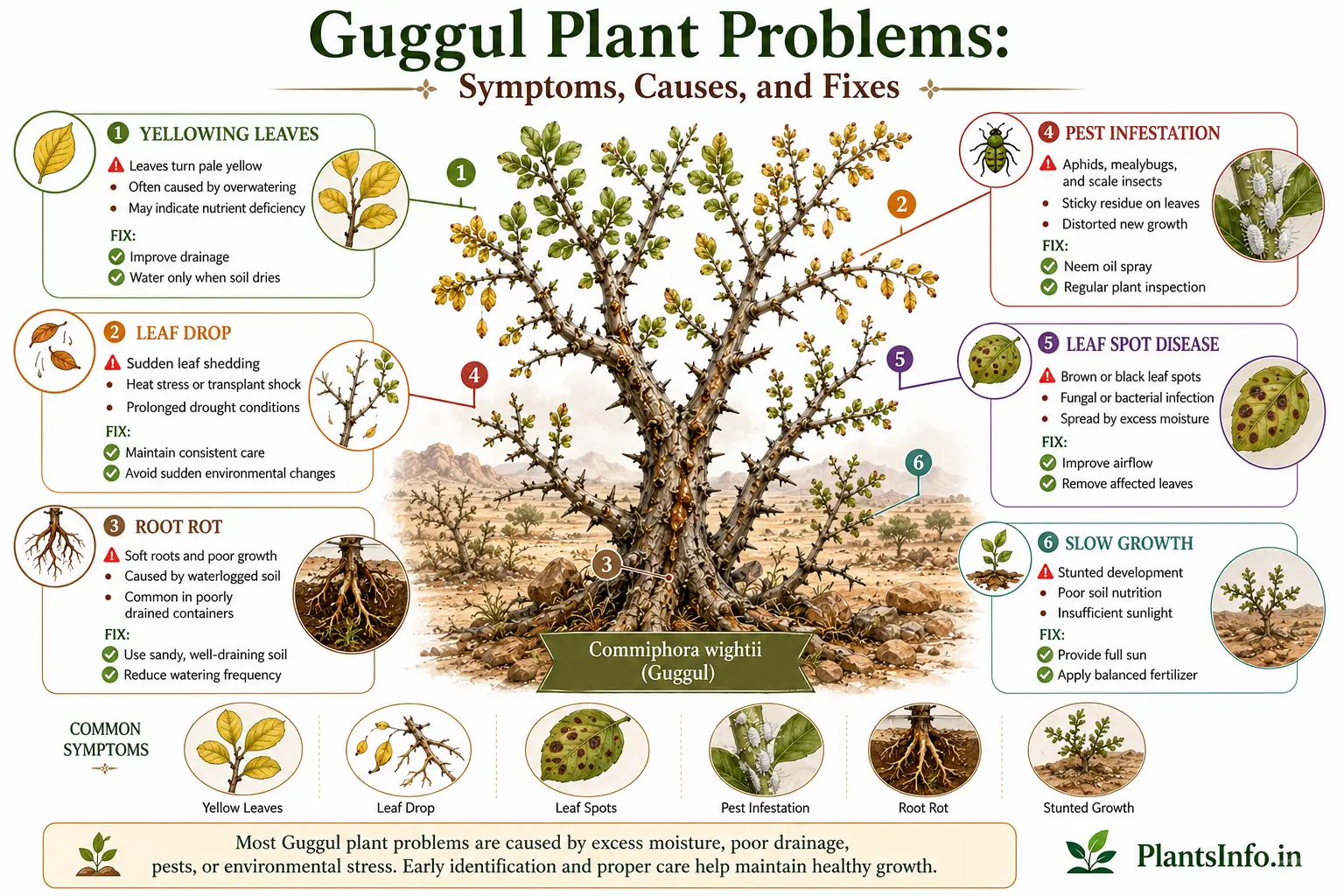
Guggul Plant Problems: Symptoms, Causes, and Fixes
“Quick Answer: Guggul is a tough, low-maintenance plant in the right climate — but in the wrong one, it fails in predictable ways. Waterlogging is the single greatest threat, followed by fungal bark disease in humid conditions and mealy bug infestations on young plants. Most problems are caused by growing guggul outside its natural arid and semi-arid range and expecting it to behave like a tropical garden plant.”
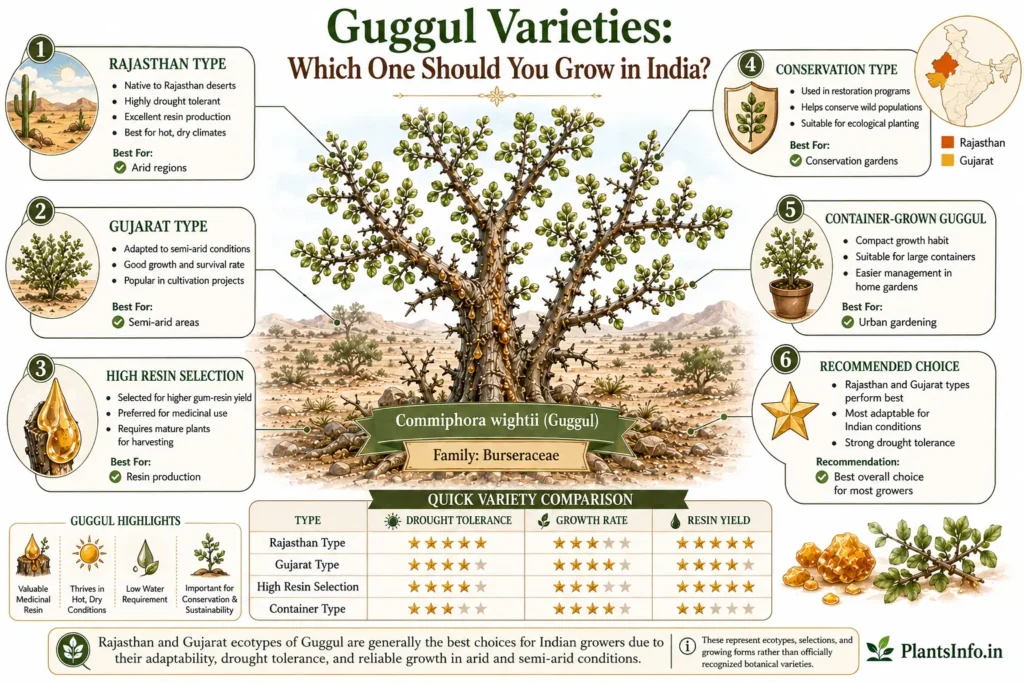
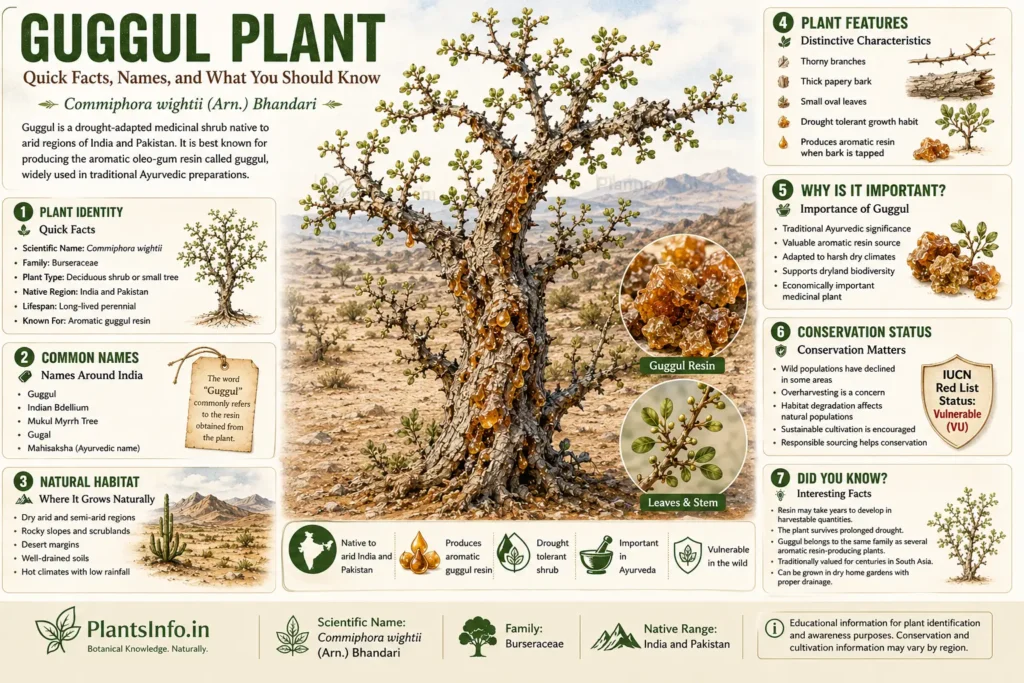
See also: Guggul Plant plant profile, how to grow it, its flowering season, its benefits, and its varieties.
Pick up a dying guggul plant and the base of the stem tells the whole story: soft, dark, slightly sunken — a root system that drowned in a soil it was never adapted to. The plant’s reputation as a hardy survivor is entirely deserved in Rajasthan and Gujarat. Transplant that reputation into a humid coastal garden with fertile loam and a generous irrigation schedule, and the plant declines within one to two monsoon seasons. The problems section for guggul is, in large part, a map of the mistakes that follow from underestimating how specifically adapted this species is to difficult conditions.
Recommended Products
Disclosure: As an Amazon Associate, PlantsInfo may earn from qualifying purchases.
🌱 Growing Essentials
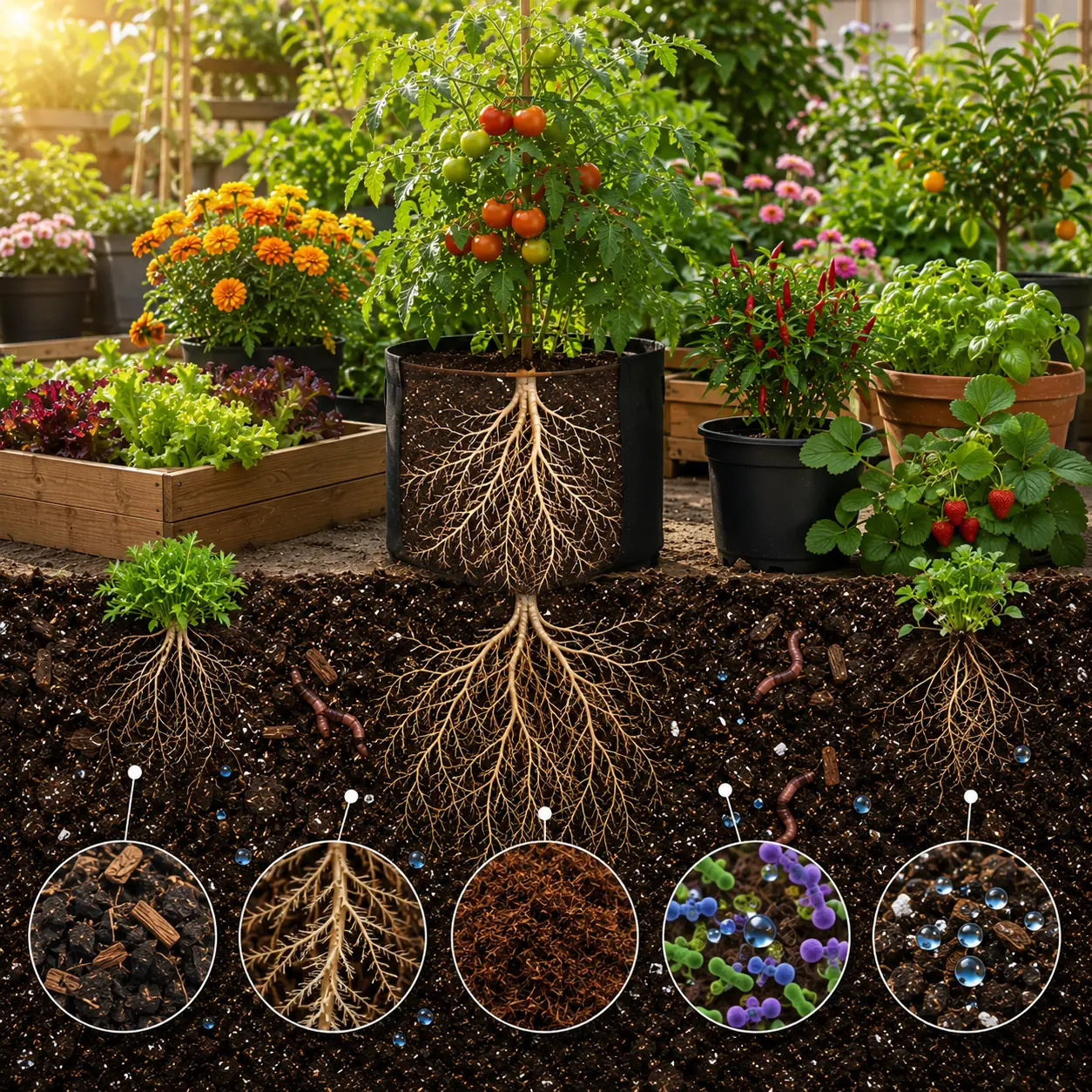
The following products can help with container gardening, potting, root development, soil management, and healthy plant growth.
Organic Potting Soil Mix
Provides nutrients, structure, and healthy growing conditions for container plants.
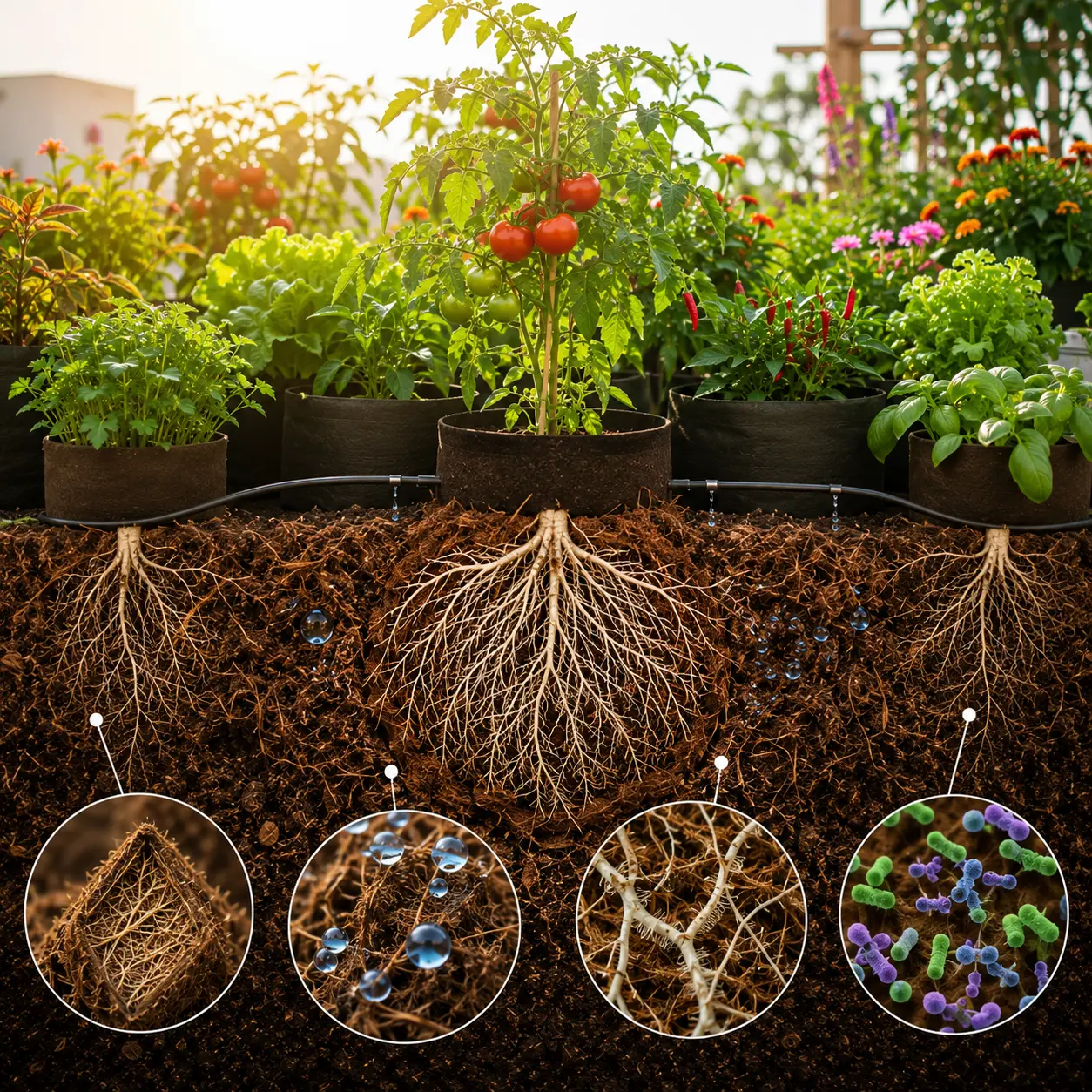
Coco Peat Growing Medium
Enhances moisture retention while maintaining excellent root-zone aeration.

Grow Bags for Plants
Improve drainage, root aeration, and vegetable production in limited spaces.

Plastic Pots for Plants
Ideal containers for seedlings, ornamentals, herbs, and balcony gardens.
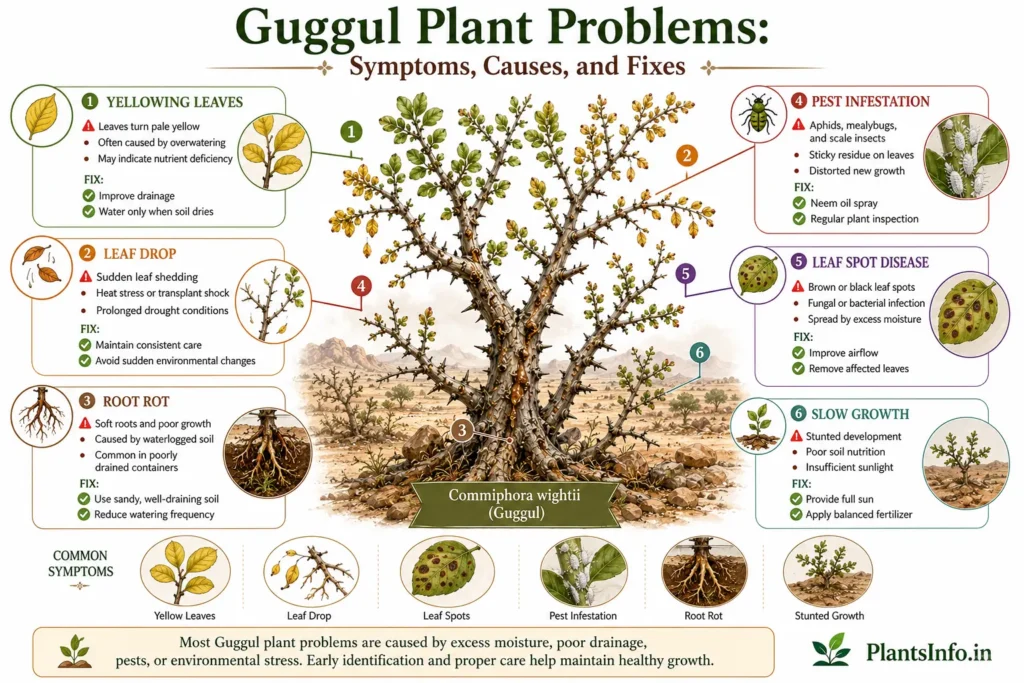
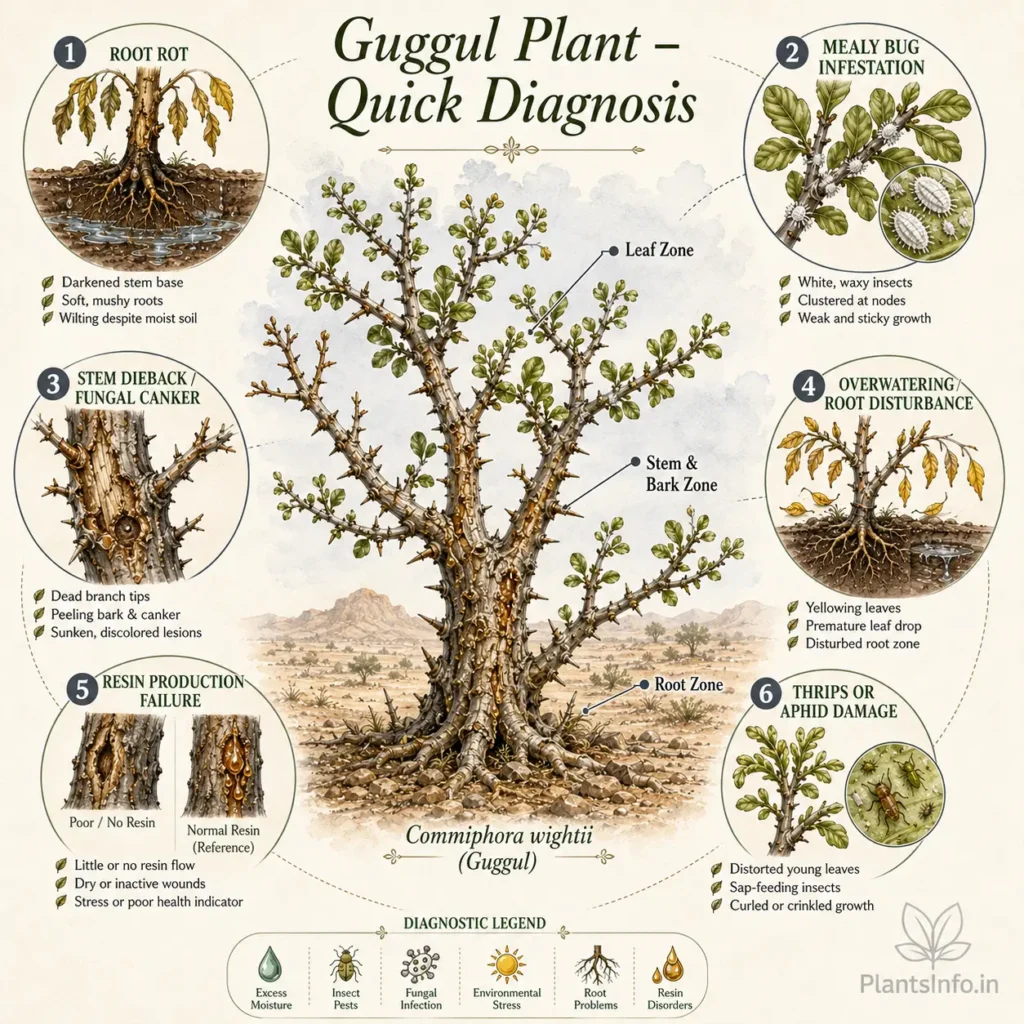
Quick Diagnosis
| Symptom | Most Likely Cause | First Action |
|---|---|---|
| Stem soft and dark at base; wilting despite moist soil | Root rot from waterlogging | Stop all irrigation; improve drainage immediately |
| White waxy clusters at branch joints | Mealy bug infestation | Spray neem oil solution; remove by hand |
| Bark peeling in large patches; no new growth | Stem dieback or fungal canker | Cut to clean wood; seal cut; inspect root zone |
| Leaves yellowing and dropping outside winter season | Overwatering or root disturbance | Reduce irrigation; check if roots are disturbed |
| Resin not appearing after wounding | Plant too young or tapping too deep | Do not tap plants under 8 years old |
| Stunted new growth; distorted young leaves | Thrips or aphid feeding | Inspect leaf undersides; apply neem oil |
| No flowers after 4+ years of growth | Wrong climate or insufficient chill | Assess site; review winter temperature records |
Diseases
Root Rot
Root rot is the most common cause of guggul plant death in cultivation and is almost always caused by overwatering or planting in poorly drained soil rather than by a primary pathogen. The causal organisms are typically Phytophthora or Pythium species — opportunistic water moulds that colonise stressed, waterlogged root tissue. In guggul, the condition progresses faster than in most garden plants because the species has virtually no tolerance for anaerobic root conditions.
The first visible sign is wilting that does not respond to watering — the plant looks drought-stressed despite moist or wet soil. Close inspection of the stem base reveals softening, darkening, and occasionally a faint odour of rot. By this stage, feeder roots have already been compromised, and recovery is unlikely if more than half the root system is affected.
There is no reliable cure for established root rot in guggul. Prevention is the only effective strategy: plant in well-drained, gritty soil; never irrigate on a fixed schedule during the monsoon; and raise the planting mound at any site with clay subsoil. If caught very early — stem base just beginning to soften, no extensive wilting yet — removing the plant from waterlogged conditions, trimming rotten roots to clean white tissue, and replanting in a drier spot with a fungicide drench (copper oxychloride at label rates) gives a chance of recovery.
Stem Canker and Bark Dieback
Stem canker in guggul presents as sunken, discoloured patches on the bark that slowly expand and can girdle branches or the main stem. The bark in affected areas peels away easily and reveals brown, dead tissue beneath. New growth above the lesion wilts and dies back progressively as the vascular tissue is interrupted.
The condition is most common in humid growing zones outside the plant’s native range — coastal Maharashtra, the sub-Himalayan belt, and areas with prolonged wet seasons — where fungal pathogens including Botryosphaeria species find conditions they do not encounter in Rajasthan’s dry climate. Physical wounds — from tapping, from insect feeding, or from accidental mechanical damage — serve as entry points.
Management requires cutting back to visibly clean, healthy wood, sterilising cutting tools with alcohol between cuts, and applying a copper fungicide paste to all cut surfaces. Do not replant guggul in the same location in humid-zone gardens where canker has occurred — the underlying climate unsuitability is the root cause, and a replacement plant will face the same pressure.
Powdery Mildew
Powdery mildew appears as white to grey powdery patches on the upper surface of young leaves and occasionally on new shoot growth. In guggul, it is an occasional problem rather than a consistent one — the plant’s arid natural habitat means it has limited evolutionary exposure to this pathogen, so susceptibility is moderate rather than high. It is most likely to appear in pre-monsoon conditions (March–May) when warm temperatures combine with low humidity fluctuations.
Affected leaves may curl and drop prematurely; in heavy infections on young plants, shoot development is slowed. The disease is rarely fatal in established guggul but can slow a young plant meaningfully.
Control is straightforward: sulphur-based wettable powder or neem oil spray (5 ml per litre with a few drops of soap) applied at the first sign of infection and repeated at seven-day intervals for two to three applications. Do not apply sulphur when temperatures exceed 38°C. Improving airflow around the plant by removing any crowding vegetation is the most sustainable prevention.
Sooty Mould
Sooty mould is not a primary disease but a secondary fungal colonisation of the sticky honeydew excreted by sucking insects — primarily mealy bugs and aphids. It appears as a black, powdery to crusty coating on leaf surfaces and young bark, reducing photosynthesis and giving the plant an unhealthy appearance.
The mould itself does not directly harm the plant tissue but is a reliable indicator that a sucking pest infestation is active or was recently active. Treating the underlying pest eliminates the honeydew source, and the mould gradually weathers away over two to three weeks. Wiping affected leaves with a damp cloth removes the coating and restores photosynthetic function faster.
Pest Problems
Mealy Bugs
Mealy bugs are the most frequently encountered pest on guggul in cultivation, particularly on young nursery-stage plants and on saplings in their first two years. They appear as white, cottony, waxy clusters at branch joints, leaf axils, and on young stems — easily mistaken for fungal growth or resin exudate at first glance. The distinction is texture: resin is transparent to amber and glossy; mealy bug colonies are opaque white and fluffy.
Feeding causes stunting, leaf curl, and distortion of new growth. In heavy infestations on young plants, the entire apical growing region can be smothered, halting shoot development entirely. Sooty mould on the stem and leaves below the infestation indicates the colonies have been active for some time.
For organic control, spray neem oil solution (5 ml per litre with a few drops of liquid soap) directly onto the colonies every five to seven days for three applications. A cotton swab soaked in rubbing alcohol applied directly to individual colonies is effective for small infestations. For persistent or heavy infestations on young plants where the entire future of the plant is at stake, imidacloprid applied as a dilute soil drench at label rates provides systemic control that neem alone cannot match.
This information is for general guidance only. Always read product labels before applying any pesticide or fungicide. Follow state agriculture department guidelines for medicinal plants intended for human use. Keep children and pets away during and after application.
Aphids
Aphids on guggul are most common on the tender new growth that emerges in March–April after the winter rest. They appear as soft-bodied, clustered insects — green to pale yellow — on shoot tips and the undersides of young leaves, causing curling, distortion, and sticky honeydew deposits. Unlike mealy bugs, aphids move when disturbed, and the colonies disperse and re-form rapidly.
Aphid pressure on guggul is typically seasonal and self-limiting in its natural range — the pre-monsoon heat that builds through April and May kills colonies before they cause lasting damage. In cultivation in cooler or more humid zones, the populations can persist longer and cause more significant growth distortion on young plants.
Organic control with neem oil spray (5 ml per litre) applied in the early morning every four to five days is effective for most infestations. A strong jet of water to dislodge colonies before spraying improves neem oil penetration. Aphid infestations on guggul are commonly mistaken for mite damage because the leaf curling and bronzing they produce look similar — inspect the leaf underside closely to confirm the pest identity before treating.
Bark Beetles and Borers
Bark beetle and borer damage is an occasional but serious problem on older guggul plants, particularly those that are already stressed by poor growing conditions or incorrect tapping. The first sign is small, circular exit holes in the bark — typically 1–3 mm in diameter — accompanied by a fine sawdust-like frass around the entry point. As the larvae tunnel through the cambium, the bark above the tunnelling area begins to die and peel, and branches above the damage point wilt and die back.
Borer damage is often confused with stem canker because both produce bark dieback and branch wilting. The distinguishing diagnostic is the exit holes and frass, which confirm borer activity; canker lesions have no holes and produce a soft, rotten-smelling tissue when the bark is removed.
Treatment requires cutting back affected branches to healthy wood, destroying the removed material, and applying a paste of neem oil and turmeric to the cut surfaces and any visible entry holes. In severe infestations where the main stem is compromised, the plant is unlikely to recover. Prevention centres on maintaining plant vigour — well-drained soil, correct watering, and avoiding unnecessary wounding of the bark — since borer attacks primarily target weakened plants.
Environmental and Care Mistakes
Overwatering — The Universal First-Timer Mistake
Every first-time guggul grower makes this mistake: they treat it like a regular garden plant and water it on a regular schedule. Guggul’s native habitat receives 200–500 mm of rainfall annually — most of it in a brief monsoon burst — and the plant’s entire physiology is calibrated for long dry intervals between water events. A twice-weekly watering schedule that suits most Indian garden plants will kill guggul within one to two monsoon seasons.
The symptom is deceptive: the plant wilts exactly as it would under drought, so the instinctive response is to water more. By the time this pattern is recognised, root damage is extensive. The fix in the early stages is to stop all irrigation immediately, improve drainage around the root zone, and wait. If the plant recovers within ten to fourteen days with no further watering, the root system is still functional. If wilting continues despite dry conditions, root rot is established.
Planting in Humid or High-Rainfall Zones
Attempting to grow guggul in Kerala, coastal Karnataka, West Bengal, Assam, or any region receiving more than 1,200 mm of annual rainfall is the second most common mistake — and the most difficult one to correct after planting. The plant will establish and grow through its first dry season, create a false sense of success, and then decline through the first full monsoon as sustained soil saturation and fungal pressure overwhelm a species that has no adaptation to these conditions.
There is no fix within these climates. Raised beds, container growing with exceptional drainage, and sheltering plants during the monsoon can extend survival but not produce a genuinely productive long-term plant. Gardeners in high-rainfall zones who wish to grow guggul for conservation purposes should use large containers that can be moved under cover from June through September — this is the only reliable strategy.
Tapping Too Early or Too Deeply
Premature resin tapping — beginning before the plant is 8–10 years old and has a stem diameter of at least 5 cm — is the single most damaging mistake made specifically to guggul in both cultivation and the wild. Young plants cannot sustain the cambium damage of incision; excessive tapping in the first decade kills plants that would otherwise produce resin for thirty or more years.
The symptom of over-tapping or deep tapping is bark that fails to callus over incision sites, followed by progressive dieback above the wound. If the incision cuts through the cambium into the sapwood, the plant’s ability to transport water and nutrients above that point is permanently compromised. The correct tapping technique — shallow incisions that nick the bark without entering the sapwood — belongs to the resin harvesting section of the Growing Guide. Do not tap any guggul plant without first reading and following those guidelines.
Wrong Season Pruning
Pruning guggul in December or January — when the bare, leafless appearance makes the plant look like it needs intervention — removes the flower buds forming on the apparently bare wood. The result is a complete failure of that year’s flowering, which in a slow-maturing plant that may only begin flowering at year three or four is a significant setback.
The correct pruning window is April–May after the leaf flush is fully established and fruit has set. At this stage, the current season’s flowering cycle is complete, and any shaping done now does not interfere with the next cycle. Light tip-pruning in October after the monsoon is also acceptable. Never prune in November–February.
Prevention Protocol
Prevention for guggul is less about a spray programme and more about getting the fundamentals correct before the plant goes in the ground.
Before planting, verify that the proposed site drains freely within two hours of saturation — pour a bucket of water into the planting pit and time the drainage. If it takes longer, add coarse gravel and broken brick to the pit and raise the planting mound. This one step prevents root rot, which is responsible for more guggul deaths in cultivation than all pests and diseases combined.
Before the monsoon (by late May), check that no mulch or debris is in contact with the stem base, that water flow from nearby beds or paths does not channel toward the plant’s root zone, and that container plants have unobstructed drainage holes. Suspend all irrigation once reliable monsoon rainfall begins.
During the monsoon (June–September), inspect the stem base monthly for any softening. Check branch joints for the first signs of mealybug colonies. Remove any fallen bark or dead branches immediately — they harbour fungal spores and borer populations.
After the monsoon (October–November), assess overall plant structure. If any branch dieback or canker is present, this is the window to cut it back before the winter flowering cycle begins. Sterilise cutting tools, seal cuts, and do not fertilise.
In winter (December–February), leave the plant completely alone. The leafless rest period is not a problem to solve.
When to Give Up on a Plant
A guggul plant that cannot be saved shows a specific combination of signs: the main stem base is completely soft and dark from ground level up, the bark peels away from the stem with no resistance and reveals uniformly brown or black tissue beneath, there is no new bud formation visible on any branch despite being past the dormancy period, and the plant has been in declining condition for two or more monsoon seasons.
At this stage, remove the plant entirely, including as much root material as is practical. Do not replant guggul in the same location for at least two years — Phytophthora spores persist in soil through multiple seasons. Replace the soil in the planting pit to a depth of 40–50 cm, or shift the new plant to a different position entirely with verified drainage.
If the failure was climate-related — persistent humidity and monsoon saturation rather than a discrete overwatering incident — do not replant guggul in the same growing zone without addressing the underlying climate unsuitability. A container strategy with monsoon shelter is the only viable path forward in such cases.
Frequently Asked Questions
My guggul plant is not producing any resin — is something wrong?
Almost certainly not. Resin production visible through natural exudation or tapping does not begin meaningfully until the plant is 8–10 years old and the stem is sufficiently developed. A young, healthy, growing plant that produces no resin is performing normally.
Can I use the same pesticide on guggul that I use on my vegetable garden?
For guggul grown for resin intended for personal Ayurvedic or ritual use, apply the same food-crop caution you would for any edible plant. Prefer neem-based treatments. If using synthetic pesticides, observe a minimum withholding period of 30 days before harvesting any resin from treated plants.
Is the guggul resin that appears naturally on the bark safe to use?
Small amounts of naturally exuded resin from a healthy, mature plant are genuine guggul but require purification (shodhana) before internal use. Raw, unpurified resin can cause digestive disturbance. For ritual incense use, raw resin is appropriate without purification.
Guggul asks very little — the right soil, honest drainage, and no excess water. Give it those three things, and it will outlast most of the garden around it.
Conclusion
Most guggul problems can be traced to a mismatch between the plant’s natural ecology and the conditions in which it is being grown. Waterlogged soils, excessive irrigation, prolonged humidity, and premature resin tapping account for the majority of serious cultivation failures. In contrast, plants grown in full sun, sharply drained soil, and a seasonally dry environment generally experience few pest or disease issues.
Successful cultivation depends less on intensive intervention and more on respecting the species’ adaptation to arid landscapes. Understanding the early symptoms of root rot, pest infestations, and climate-related stress allows growers to correct problems before permanent damage occurs and helps ensure the long-term survival of this increasingly important conservation species.