Ashwagandha Seasonal Care Guide: India
Quick Answer
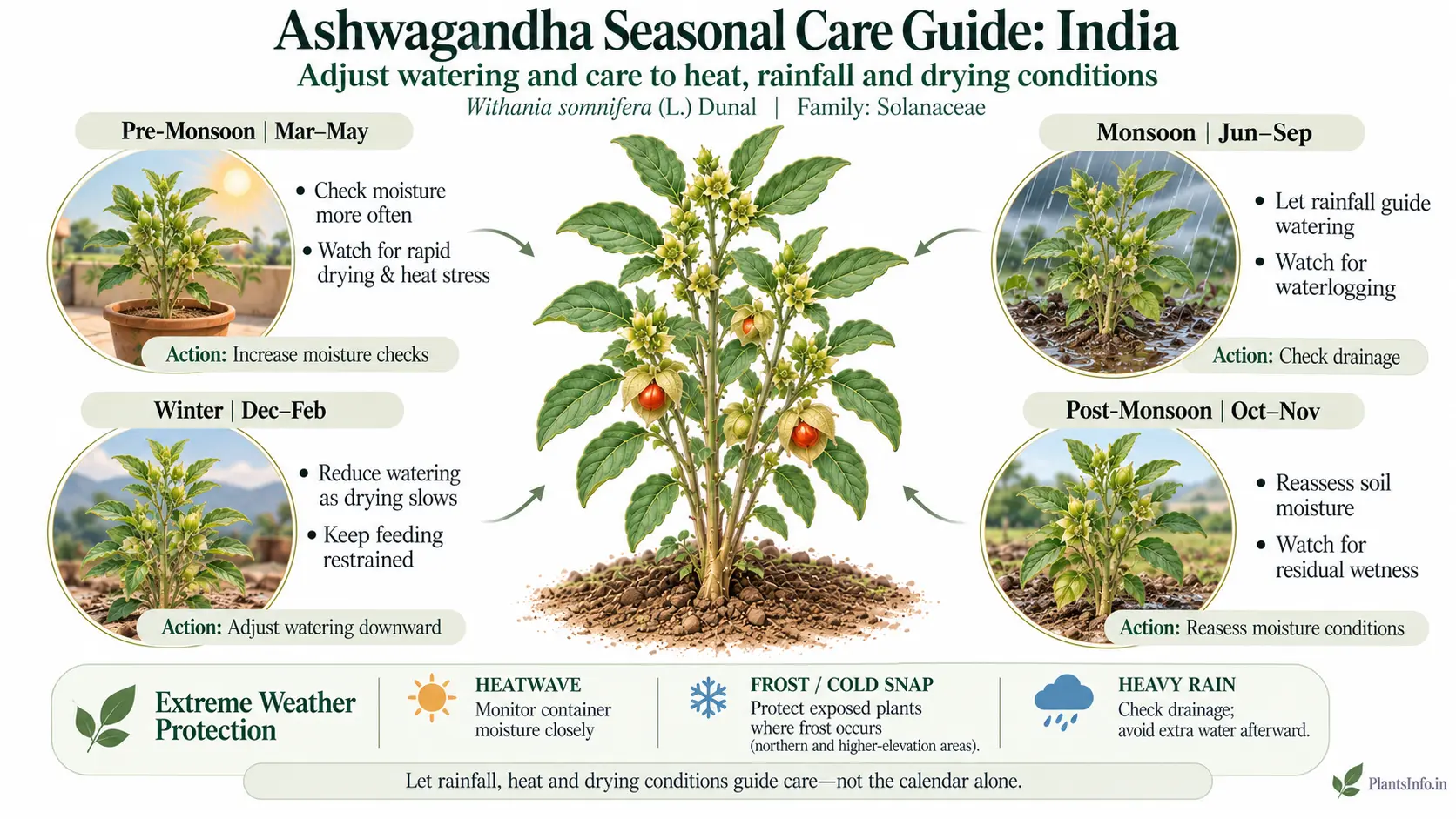
Ashwagandha needs the closest seasonal attention during the Monsoon (Jun–Sep), when frequent rainfall can keep the root zone excessively wet. Across the year, adjust watering and feeding to actual moisture conditions rather than following one fixed routine.
See also: Ashwagandha plant profile, how to grow it, common problems, its flowering season, and its benefits.
Ashwagandha suits a seasonal approach because Indian rainfall and evaporation can change substantially through the year. The useful distinction for a home gardener is not simply the month, but whether heat, rainfall, or cooler conditions are currently controlling moisture around the plant.
Recommended Products
Disclosure: As an Amazon Associate, PlantsInfo may earn from qualifying purchases.
🌱 Growing Essentials
The following products can help with container gardening, potting, root development, soil management, and healthy plant growth.
Organic Potting Soil Mix
Provides nutrients, structure, and healthy growing conditions for container plants.
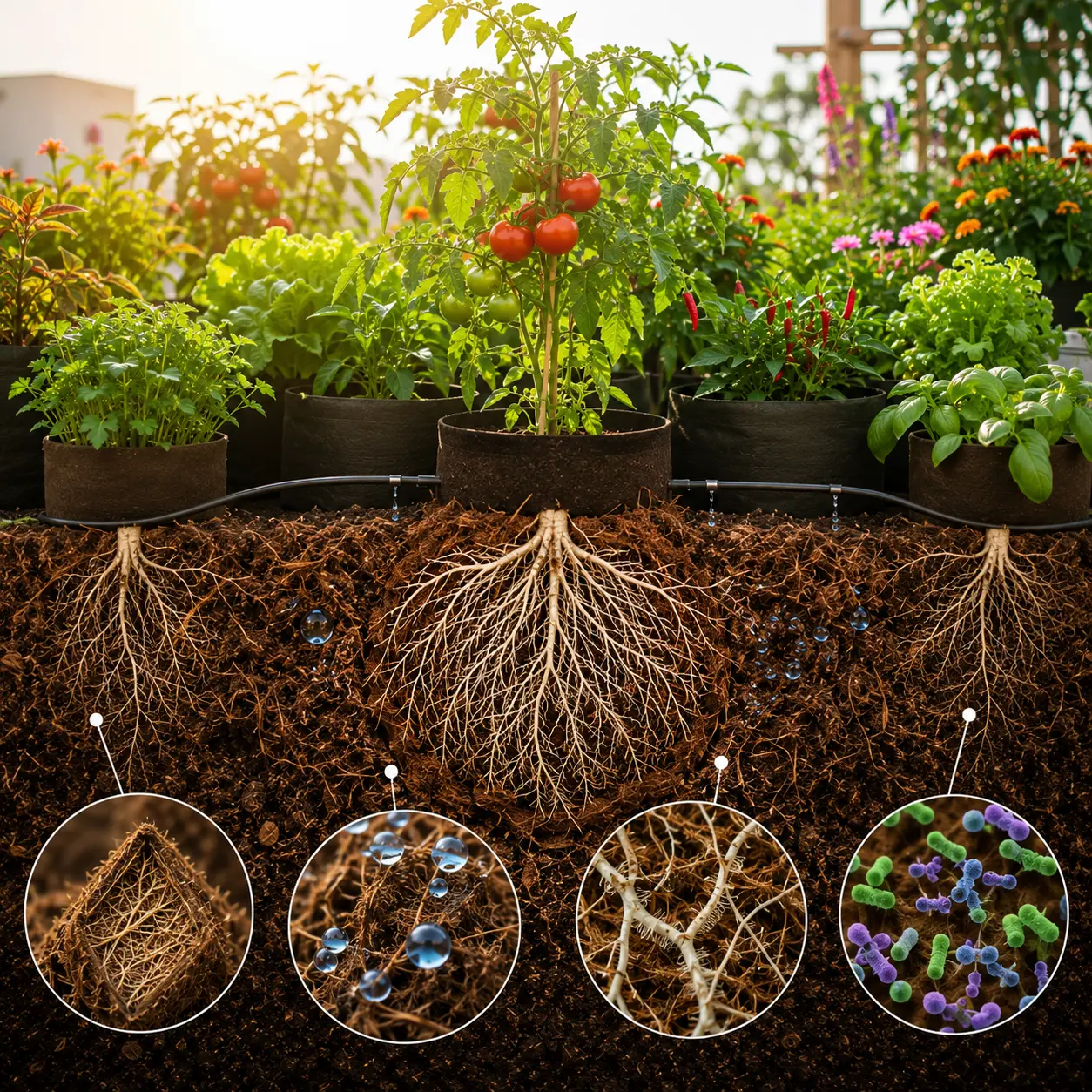
Coco Peat Growing Medium
Enhances moisture retention while maintaining excellent root-zone aeration.

Grow Bags for Plants
Improve drainage, root aeration, and vegetable production in limited spaces.

Plastic Pots for Plants
Ideal containers for seedlings, ornamentals, herbs, and balcony gardens.
Quick Seasonal Overview
| Season | Care Focus | Watch Out For |
|---|---|---|
| Pre-monsoon (Mar–May) | Monitor increasing moisture demand | Rapid drying and heat stress |
| Monsoon (Jun–Sep) | Let rainfall guide watering | Waterlogging and prolonged wetness |
| Post-monsoon (Oct–Nov) | Reassess care after heavy rain | Residual excess moisture |
| Winter (Dec–Feb) | Keep inputs restrained | Slow drying and cold nights |
Pre-Monsoon Care (Mar–May)
As temperatures rise, exposed containers can lose moisture faster than they did during cooler months. Check the growing medium more frequently during prolonged hot, dry weather, but do not convert every hot day into a reason for frequent watering.
Feeding does not need to increase simply because temperatures rise. Keep fertilising moderate and avoid using extra feed as a substitute for adequate light or suitable soil conditions.
Ashwagandha grown on a terrace can also experience greater heat around the container than a plant surrounded by garden soil. During severe hot spells, the container position deserves particular attention.
Action point: Increase moisture checks as hot, dry weather develops.
Monsoon Care (Jun–Sep)
During the Monsoon, rainfall can supply much of the plant’s moisture requirement. The priority therefore shifts toward preventing prolonged saturation rather than maintaining a routine watering frequency.
Where rain is frequent, pause supplemental watering whenever the growing medium remains adequately moist. Feeding should also remain conservative during extended wet periods rather than being applied automatically according to a normal schedule.
High humidity and persistent wetness can increase the general risk of fungal problems. This is a seasonal risk to manage through appropriate site conditions, not a reason to add routine treatments.
Action point: Check drainage before periods of sustained rainfall.
Post-Monsoon Care (Oct–Nov)
After the main rains, reassess the growing medium before returning to a warmer-season routine. Residual moisture can persist even after rainfall becomes less frequent, particularly in containers or poorly drained ground.
This is also a useful period to review the condition of the planting area and remove conditions that became problematic during the Monsoon. If repotting or transplanting is already appropriate for the plant, the post-monsoon period can be considered when local moisture conditions are suitable.
Do not assume that the end of heavy rain means watering requirements immediately return to their pre-monsoon level.
Action point: Reassess moisture conditions after the main rains.
Winter Care (Dec–Feb)
Cooler weather generally slows moisture loss, so watering frequency should be reduced when the growing medium stays moist for longer. Avoid maintaining a warm-weather watering pattern simply because the plant remains outdoors.
Cold conditions are more relevant in northern and higher-elevation parts of India than in warmer regions. Where frost occurs, protect exposed plants during frost events rather than treating all winter conditions as equally severe.
Winter is also a poor reason to increase feeding. Keep inputs restrained while cool conditions persist.
Action point: Adjust watering downward when cool weather slows drying.
Extreme Weather Protection
Heatwave
During an exceptional heatwave, give container-grown Ashwagandha the most favourable practical position available and monitor moisture more closely than under normal conditions. Avoid allowing a hot container to become severely dry while also avoiding routine overwatering.
Frost or Cold Snap
Where frost is possible, protect exposed plants during the affected nights. This precaution is particularly relevant in frost-prone northern and higher-elevation locations.
Exceptional Heavy Rain
Before an unusually heavy rainfall event, check that drainage outlets and container holes are unobstructed. Afterward, do not add supplemental water until the growing medium actually requires it.
Seasonal Care Calendar
| Month | Care Task |
|---|---|
| January | Keep watering restrained while conditions remain cool. |
| February | Begin checking moisture more closely as temperatures rise. |
| March | Monitor containers during increasingly hot, dry periods. |
| April | Check exposed plants for rapid moisture loss. |
| May | Check drainage before the main rains arrive. |
| June | Let rainfall determine whether supplemental watering is needed. |
| July | Avoid routine watering during persistent rainfall. |
| August | Maintain attention to drainage during wet periods. |
| September | Continue checking moisture while substantial rain persists. |
| October | Reassess the growing medium after the main rains. |
| November | Adjust watering as cooler conditions begin to slow drying. |
| December | Keep watering restrained during cool weather. |
Seasonal Mistakes to Avoid
- Carrying the pre-monsoon watering routine into the Monsoon: increasing rainfall can make the same routine unnecessarily wet once the seasonal moisture pattern changes.
- Returning immediately to heavy watering after the Monsoon: soil can remain moist after rainfall declines, so the transition should follow actual drying rather than the calendar alone.
- Keeping warm-weather watering habits in Winter: slower evaporation means the growing medium can stay wet for longer during the Winter transition.
Conclusion
Good seasonal care means letting rainfall, heat, and drying conditions determine adjustments rather than treating Ashwagandha as a plant with one watering routine all year.