Star Fruit Plant Problems: Symptoms, Causes, and Fixes
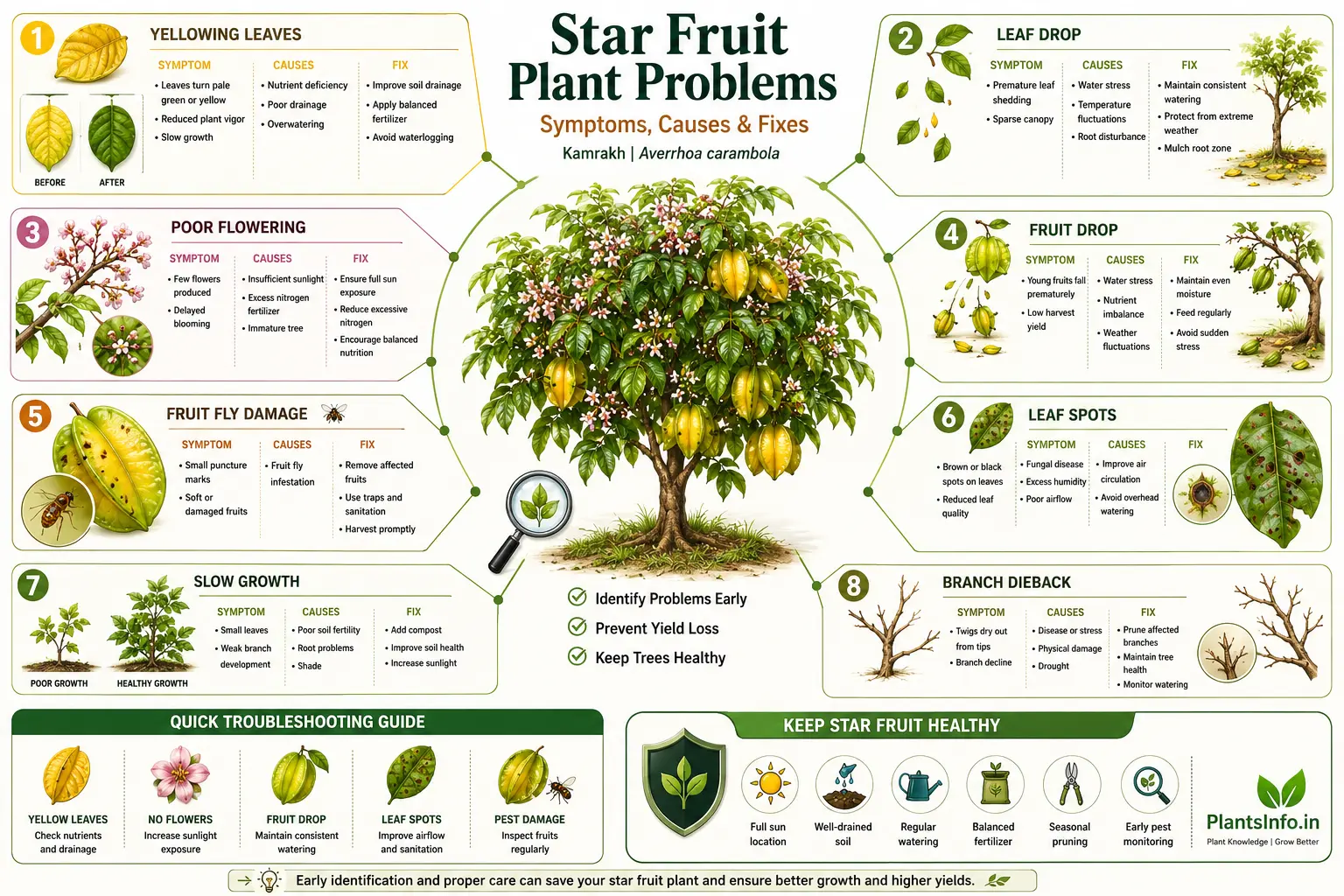
Quick Answer:Most star fruit problems in Indian gardens trace back to three root causes — waterlogged soil during the monsoon, sucking pests that go unnoticed until damage is severe, and fungal diseases that establish in the humid post-monsoon period. Nearly all of them are preventable with seasonal attention and good drainage.
See also: Star Fruit plant profile, how to grow it, its flowering season, its benefits, and its varieties.
Slice open a star fruit with brown-edged skin and watery, flavourless flesh, and you are looking at a problem that started weeks or months earlier — likely in the root zone, not on the fruit itself. Kamrakh gives early warning signs if you know where to look, and most issues that reach the fruit could have been intercepted at the leaf or branch stage. The tree is not fragile; it is just specific about what it will not tolerate.
Recommended Products
Disclosure: As an Amazon Associate, PlantsInfo may earn from qualifying purchases.
🌱 Growing Essentials
The following products can help with container gardening, potting, root development, soil management, and healthy plant growth.
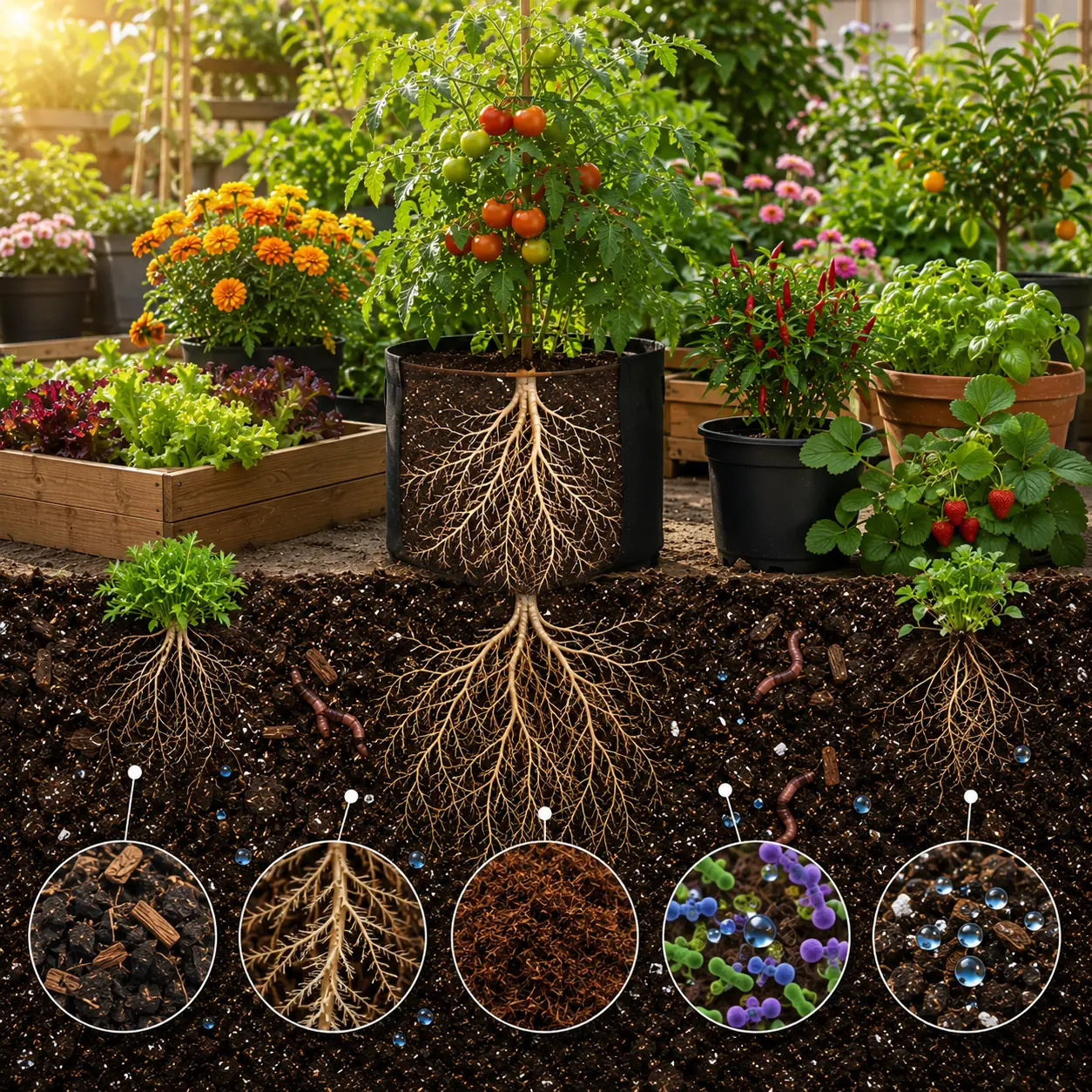
Organic Potting Soil Mix
Provides nutrients, structure, and healthy growing conditions for container plants.
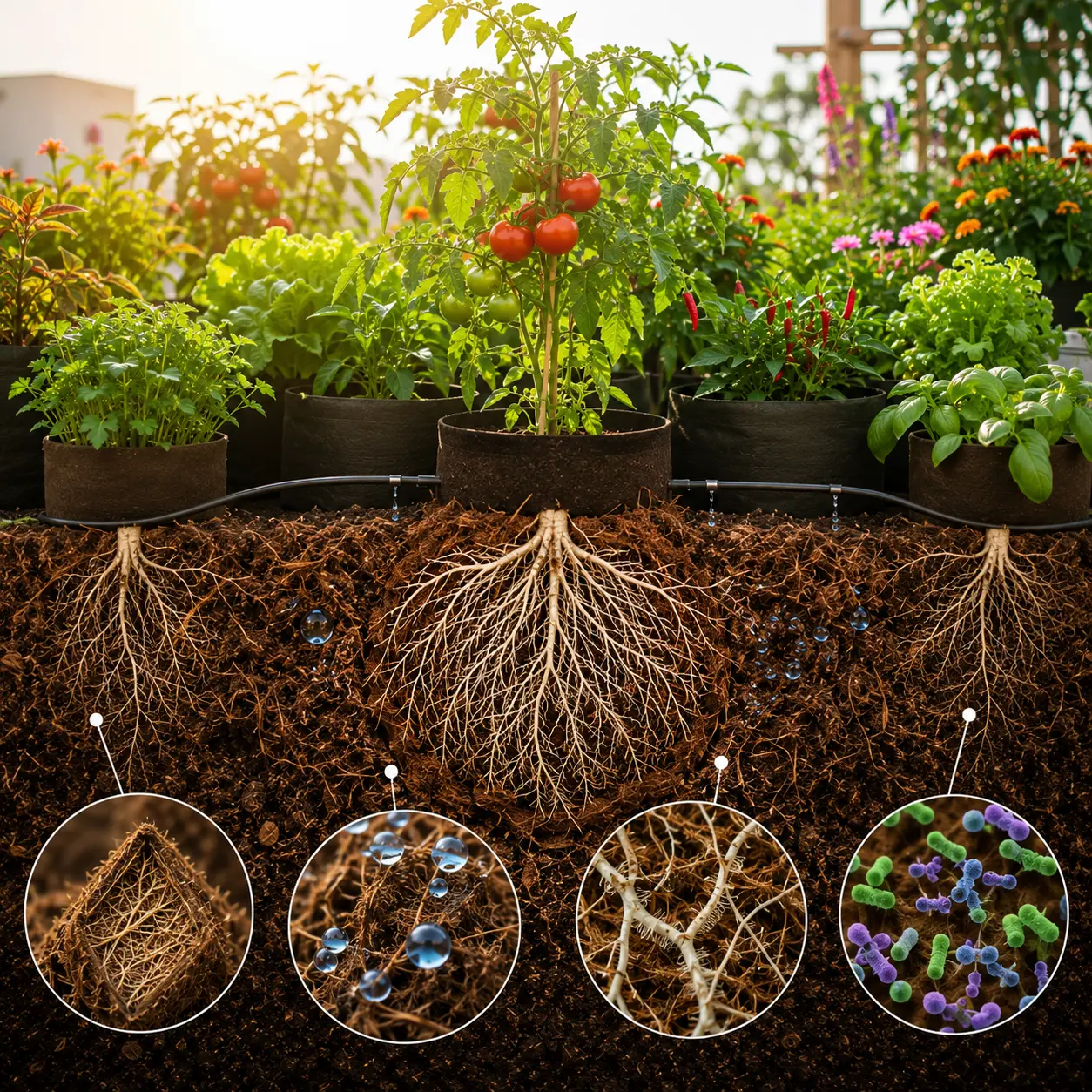
Coco Peat Growing Medium
Enhances moisture retention while maintaining excellent root-zone aeration.

Grow Bags for Plants
Improve drainage, root aeration, and vegetable production in limited spaces.

Plastic Pots for Plants
Ideal containers for seedlings, ornamentals, herbs, and balcony gardens.
Quick Diagnosis

| Symptom | Most Likely Cause | First Action |
|---|---|---|
| Young leaves curling inward, pale yellow | Waterlogging or thrips | Check root zone drainage; inspect leaf undersides |
| Sooty black coating on leaves | Mealy bug or aphid honeydew | Remove insects; wipe leaves with neem water |
| Small fruit dropping before ripening | Root stress or irregular watering | Check drainage; stabilise irrigation |
| Brown, sunken spots on fruit skin | Anthracnose fungus | Remove affected fruit; apply copper fungicide |
| White powdery patches on leaves | Powdery mildew | Increase airflow; apply sulphur dust |
| Leaves yellowing from older growth inward | Iron or magnesium deficiency | Apply chelated micronutrient mix to soil |
| Sudden branch dieback with no visible pest | Stem canker or root rot | Cut to clean wood; inspect root zone |
Diseases
Anthracnose
Anthracnose (Colletotrichum gloeosporioides) is the most damaging fungal disease of star fruit in India and the one most likely to affect the harvest directly. It appears first as small, water-soaked spots on the fruit skin — typically near the ridges — which darken and sink into the flesh as the infection progresses. On leaves, it produces irregular brown patches with yellow halos that spread inward from the leaf margin. In severe infections, young shoots die back from the tip.
The fungus thrives in warm, humid conditions and spreads rapidly during and immediately after the monsoon. Overhead irrigation, crowded canopies, and fruit left on the tree past peak ripeness all increase infection pressure. Anthracnose can be managed but not fully eliminated once a garden has established spore populations in the soil and leaf litter.
Management involves removing and destroying all affected fruit and fallen leaves immediately — do not compost them. Apply a copper-based fungicide (copper oxychloride at label rates) at the first sign of fruit spotting and repeat every ten to fourteen days during high-humidity periods. Improving canopy airflow through pruning reduces humidity at the branch level and is the single most effective preventive step.
Powdery Mildew
Powdery mildew presents as white to grey powdery patches on the upper surface of young leaves and occasionally on flower buds. Unlike most fungal diseases, it develops in warm, dry conditions with low humidity — making it a pre-monsoon and early post-monsoon problem in India rather than a monsoon one. In North India, it is most common from February through April.
Affected leaves may curl, yellow, and drop prematurely. Flower buds with mildew infection often fail to open or produce malformed flowers that do not set fruit. Oidium species cause the disease and spread via wind-borne spores.
It can be controlled effectively if caught early. Sulphur-based fungicide dust or wettable sulphur spray applied at the first sign of white patches, repeated every seven days for three applications, gives reliable control. Neem oil spray (2–3 ml per litre of water) is an effective organic alternative. Do not apply sulphur when temperatures exceed 35°C — it can cause leaf burn.
Stem Canker
Stem canker produces sunken, discoloured lesions on the bark of branches, typically starting at a wound site — a pruning cut, a physical injury, or an insect feeding point. The lesion slowly expands, girdling the branch and cutting off water and nutrient supply to the growth above it. Affected branches wilt suddenly and die back, a symptom that is often mistaken for root problems or drought stress.
The causal organisms are typically Botryosphaeria or related fungal species that enter through wounds. The disease is not curable once a branch is fully girdled — the branch must be removed. Cut well below the visible lesion margin into clean, white wood and sterilise pruning tools with alcohol between cuts to prevent spreading the pathogen to healthy tissue.
Prevention is straightforward: make clean cuts when pruning, apply a wound sealant or paste of copper fungicide mixed with paste to all cuts larger than 2 cm in diameter, and avoid injuring bark during weeding or cultivation near the base of the tree.
Root Rot
Root rot is caused by Phytophthora species and is the most common cause of sudden, unexplained decline in star fruit trees in India. It is not a disease that announces itself with dramatic leaf symptoms early on — the tree appears to be wilting from drought, which leads many gardeners to water more, which accelerates the problem. By the time leaves turn yellow extensively and branches begin dying back, a significant portion of the feeder root system has been destroyed.
The conditions that trigger root rot are waterlogged soil — particularly heavy clay with poor drainage — and planting in low-lying areas where monsoon runoff collects. There is no chemical cure for established root rot. Severely affected trees rarely recover. Improve drainage around the root zone immediately, reduce watering completely, and remove all mulch from the trunk base. In the earliest stages, fungicide drenches may slow disease progression, but severely affected trees rarely recover once extensive root damage has occurred.
Pest Problems
Mealy Bugs
Mealy bugs are the most common pest of star fruit in Indian gardens. They appear as white, waxy, cottony clusters on branch joints, leaf undersides, and along fruit ridges — easily mistaken for fungal growth on first inspection. The insects feed by sucking sap from the plant, weakening young shoots and causing leaf curl and distortion. Their most visible secondary effect is the sooty mould that colonises the sticky honeydew they excrete, turning leaves and fruit surfaces black.
For organic control, spray a solution of neem oil (5 ml per litre) with a few drops of liquid soap to aid adhesion, targeting the colonies directly. A cotton swab dipped in rubbing alcohol applied to individual clusters is effective for small infestations. For heavy infestations, imidacloprid-based systemic insecticide applied as a soil drench or dilute foliar spray gives reliable control — follow label rates strictly. Repeat treatments at ten-day intervals for two to three cycles to break the egg cycle.
This information is for general guidance only. Always read product labels before applying any pesticide or fungicide. Follow state agriculture department guidelines for food crops. Keep children and pets away during and after application.
Fruit Flies
Bactrocera species — particularly the oriental fruit fly (Bactrocera dorsalis) — are a serious post-monsoon pest of star fruit across South and Central India. The female fly punctures ripening fruit skin to lay eggs; the larvae develop inside the flesh, causing internal browning and premature fruit drop. Affected fruit shows a small puncture mark on the skin and may ooze slightly; when cut open, the flesh is discoloured and may contain small white maggots.
Fruit fly damage is commonly mistaken for a fungal disease because the external skin discolouration resembles anthracnose spotting. The distinguishing test is cutting the fruit open — maggots or larval tunnelling confirm fruit fly, not fungus.
Organic management relies on methyl eugenol traps (widely available in Indian agri-input shops), which attract and kill male flies and reduce population pressure. Bagging individual fruit clusters with paper or non-woven bags from the early development stage provides near-complete protection and is practical for home garden trees. Remove and destroy all fallen fruit immediately — leaving it on the ground sustains the breeding population.
Thrips
Thrips are tiny, elongated insects — barely visible to the naked eye — that feed on flower buds and the undersides of young leaves. Their damage appears as silvery or bronze streaking on leaf surfaces, distorted leaf margins curling inward, and, most critically, flower bud drop before the flowers open. In high-pressure situations, an entire flowering flush can be lost to thrips damage without a single flower opening.
Thrips damage to young leaves is often mistaken for a watering problem or a deficiency because the curling and discolouration pattern is similar. Close inspection of the leaf underside with a magnifying glass will reveal the insects or their black faecal deposits.
Neem oil spray (5 ml per litre with soap) applied in the evening every five to seven days during the flowering period reduces thrips pressure significantly. For severe infestations during a critical flowering flush, a spinosad-based insecticide gives faster knock-down with lower toxicity to pollinators than synthetic pyrethroids.
Environmental and Care Mistakes
Overwatering During the Monsoon
This is the mistake that finishes more star fruit trees in India than any pest or disease. Gardeners who water on a fixed schedule — say, every two days — and maintain that schedule through the monsoon are effectively drowning the root zone. Star fruit roots can begin suffering oxygen stress after prolonged soil saturation, particularly in heavy soils, and the tree does not show distress visibly until well after the damage is done.
The symptom is deceptive: leaves look healthy initially, then the youngest growth at branch tips begins to pale and curl inward. By the time the older leaves turn yellow, the feeder roots are already compromised. Fix: suspend all supplemental irrigation the moment monsoon rainfall is sufficient to keep the soil moist, improve drainage if water pools around the base, and pull back any mulch from direct contact with the trunk.
Planting in Full Shade or Partial Shade
Star fruit planted in a spot that receives less than four to five hours of direct sun daily will grow vegetatively — it will produce leaves and shoots — but will flower sparsely and fruit poorly. This is one of the most common disappointments for gardeners who plant under the canopy of a larger tree or against a north-facing wall. The tree looks alive and healthy for one to two years before the lack of fruiting reveals the problem.
There is no fix other than transplanting the tree to a sunnier position while it is still young enough to survive the move — typically in the first year. After the second year, transplanting a star fruit tree is rarely successful. Choose the site correctly before planting.
Pruning at the Wrong Time
Heavy pruning carried out in October or November — when the tree is approaching or in its second flowering flush — removes the fruiting wood and eliminates that season’s harvest. Many first-time growers prune when they notice the tree looks overgrown, without checking whether buds or small fruit are already present.
The correct pruning window is January–February, after the post-monsoon harvest is complete and before the February bud development begins. Tip-pruning during the growing season to manage container plants is acceptable, but removing significant branch mass outside the January–February window will cost fruit.
Micronutrient Deficiency Mistaken for Disease
Iron deficiency (interveinal yellowing on young leaves), magnesium deficiency (yellowing of older leaves from the centre outward), and zinc deficiency (small, distorted new leaves with shortened internodes) are common in star fruit grown in alkaline soils or soils that have been over-limed. Each produces symptoms that gardeners frequently diagnose as disease or pest damage and treat with fungicides — which has no effect.
The distinguishing pattern: deficiency symptoms are systemic and symmetrical across the plant; disease symptoms are localised and spread progressively. Correct with a chelated micronutrient foliar spray or a soil application of sulphate of iron or magnesium sulphate (Epsom salt). Reduce soil pH if it is above 7.0 by incorporating elemental sulphur or acidic compost.
Prevention Protocol
The four habits that prevent the majority of star fruit problems in Indian conditions are:
Before the monsoon arrives (by late May), check that water drains freely from the root zone within two hours of heavy watering — improve with sand or create a drainage channel if it does not. At the same time, apply well-rotted compost or neem cake around the drip line to support soil health and reduce pest pressure.
During the monsoon (June–September), suspend irrigation whenever rainfall exceeds 50 mm per week, inspect the branch joints and leaf undersides for mealy bug colonies every two to three weeks, and remove any fallen fruit from the ground within 24 hours to break the fruit fly breeding cycle.
After the monsoon (October–November), clear all fallen leaves and dried flower stalks from beneath the tree and dispose of them rather than composting — this removes the overwintering spore load for anthracnose and powdery mildew for the following season.
In winter (January–February), carry out any structural pruning, sterilise tools between cuts, and seal large cuts with copper paste.
When to Give Up on a Plant
A star fruit tree showing all of the following simultaneously is unlikely to recover: complete branch dieback on more than half the canopy, no new growth despite the correct season for vegetative activity, roots that are brown and mushy rather than white and firm when the soil is pulled away, and bark at the base that peels easily and smells of rot.
At this point, remove the tree entirely, including as much of the root system as practical. Do not immediately replant star fruit — or any Averrhoa species — in the same location. Phytophthora spores persist in soil for two or more years. Replace the soil in the planting pit to a depth of 50 cm, or wait at least two monsoon cycles before replanting in that spot.
If the problem was pest-driven rather than root rot — if the tree died following severe mealy bug or fruit fly damage with no root zone issues — replanting in the same spot after improving cultural conditions is reasonable.
Frequently Asked Questions
Is it safe to eat star fruit from a tree that was sprayed with pesticide?
Wait the full withholding period specified on the product label before harvesting — typically 7–14 days for most registered insecticides. Wash fruit thoroughly before eating. When in doubt, use neem-based or organic treatments in the final four weeks before the expected harvest.
My tree flowered well but set almost no fruit — is this a disease?
No. Poor fruit set after good flowering is almost always a pollination issue — either a heat event during the bloom window disrupted bee activity, or thrips damaged the buds before they opened. Check the following season’s flush; if it sets normally, the problem was environmental, not a disease.
Can I save a star fruit branch that has stem canker?
Only if the canker has not yet girdled the branch fully. Cut at least 10 cm below the visible margin of the lesion into completely healthy wood, sterilise your cutting tool with alcohol, and seal the cut surface. If the wood inside the cut is still discoloured, cut further down.
Conclusion
Most star fruit problems develop gradually and give warning signs long before the tree declines seriously. Good drainage, regular inspection of leaves and branch joints, seasonal pruning, and prompt removal of diseased fruit prevent the majority of issues encountered in Indian gardens. Understanding whether a symptom is caused by pests, disease, nutrient deficiency, or environmental stress allows gardeners to act early and avoid unnecessary treatments. With proper seasonal care, star fruit remains one of the more reliable fruit trees for home gardens across tropical and subtropical India.