Star Fruit Plant: Quick Facts, Names, and What You Should Know

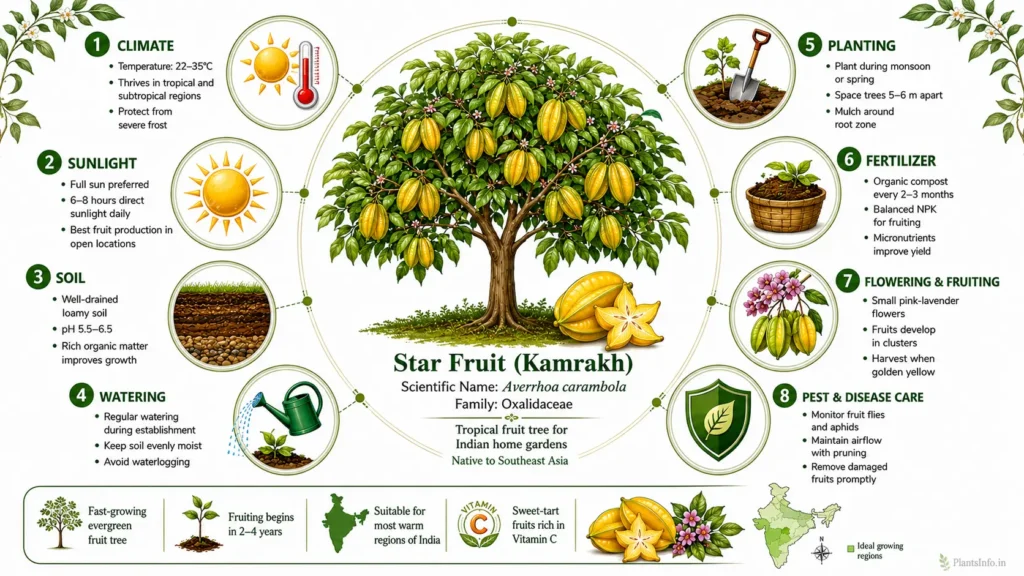
Quick Answer: Star fruit (Averrhoa carambola) is a tropical evergreen fruit tree native to Southeast Asia, now widely grown across South India, the Northeast, West Bengal, and coastal Maharashtra. The fruit’s unmistakable five-ribbed cross-section — a perfect star when sliced — makes it one of the most recognisable fruits in any Indian market.
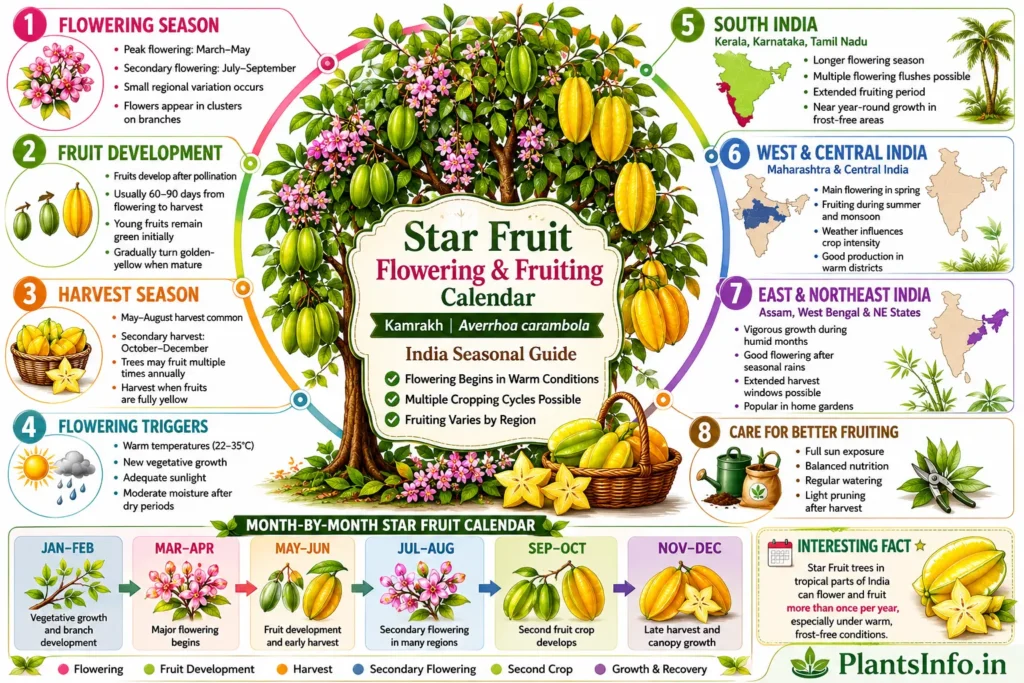
See also: Star Fruit plant profile, how to grow it, common problems, its flowering season, and its benefits.
Walk through a wet market in Kolkata on a July afternoon, and you will find small green-yellow stars piled on banana leaves, already salted, already drawing a crowd. The vendor does not need to explain what they are. Kamrakh is one of those fruits that announces itself — by shape, by sourness, by the way a single slice turns any plate into something that looks deliberately composed. Yet outside Bengal, Kerala, and parts of Andhra Pradesh, it remains underknown in Indian horticulture, planted occasionally but rarely understood well.
Recommended Products
Disclosure: As an Amazon Associate, PlantsInfo may earn from qualifying purchases.
🌱 Growing Essentials
The following products can help with container gardening, potting, root development, soil management, and healthy plant growth.
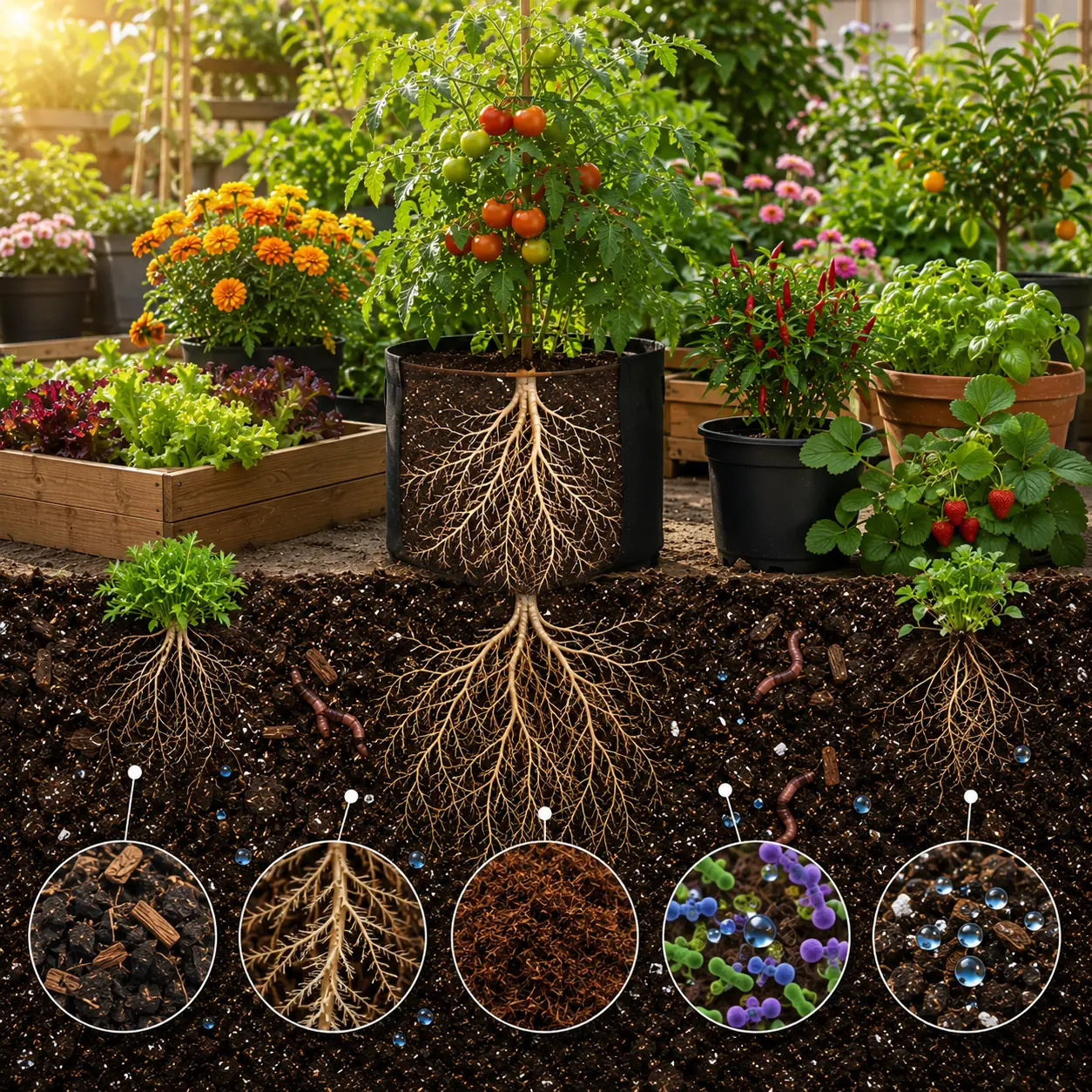
Organic Potting Soil Mix
Provides nutrients, structure, and healthy growing conditions for container plants.
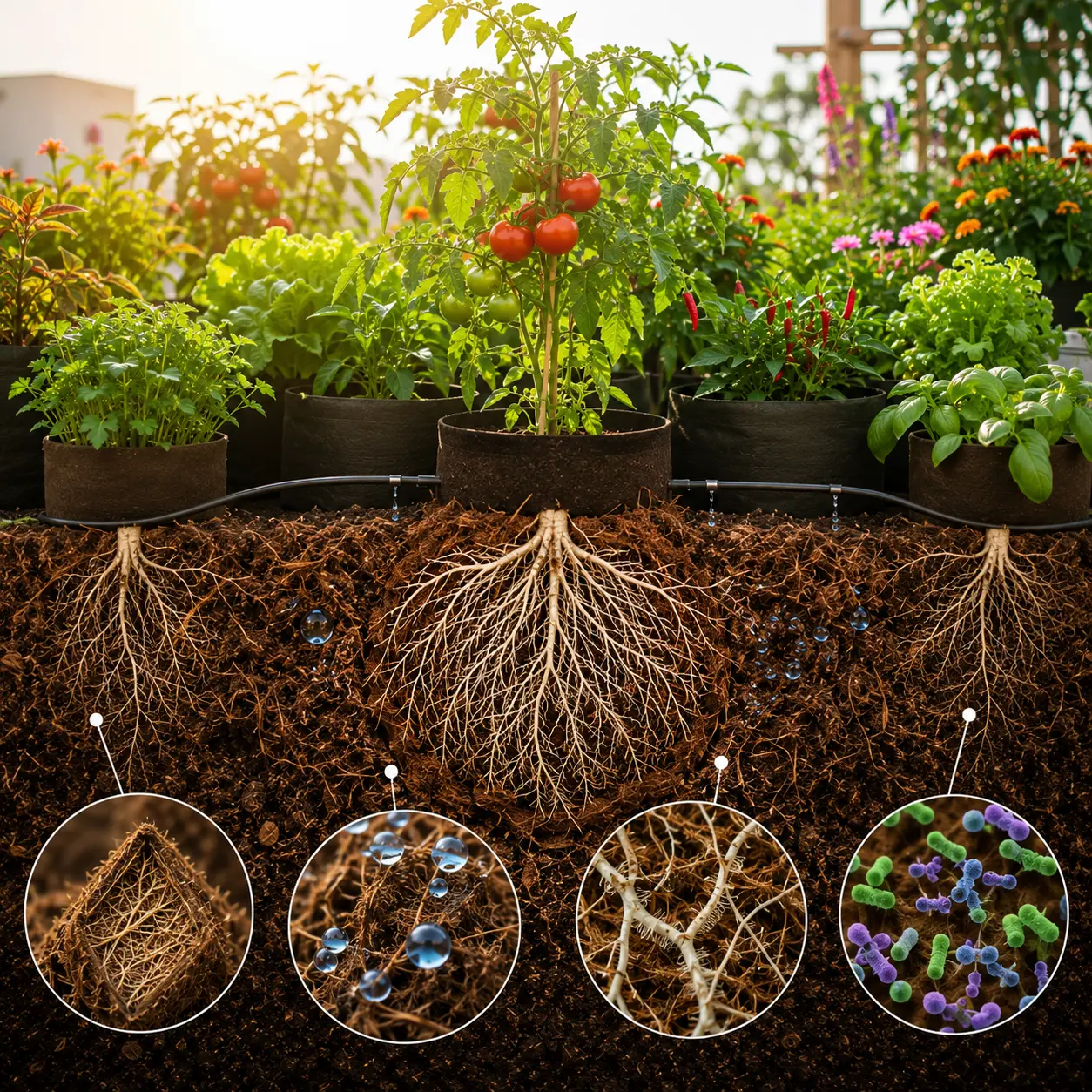
Coco Peat Growing Medium
Enhances moisture retention while maintaining excellent root-zone aeration.

Grow Bags for Plants
Improve drainage, root aeration, and vegetable production in limited spaces.

Plastic Pots for Plants
Ideal containers for seedlings, ornamentals, herbs, and balcony gardens.
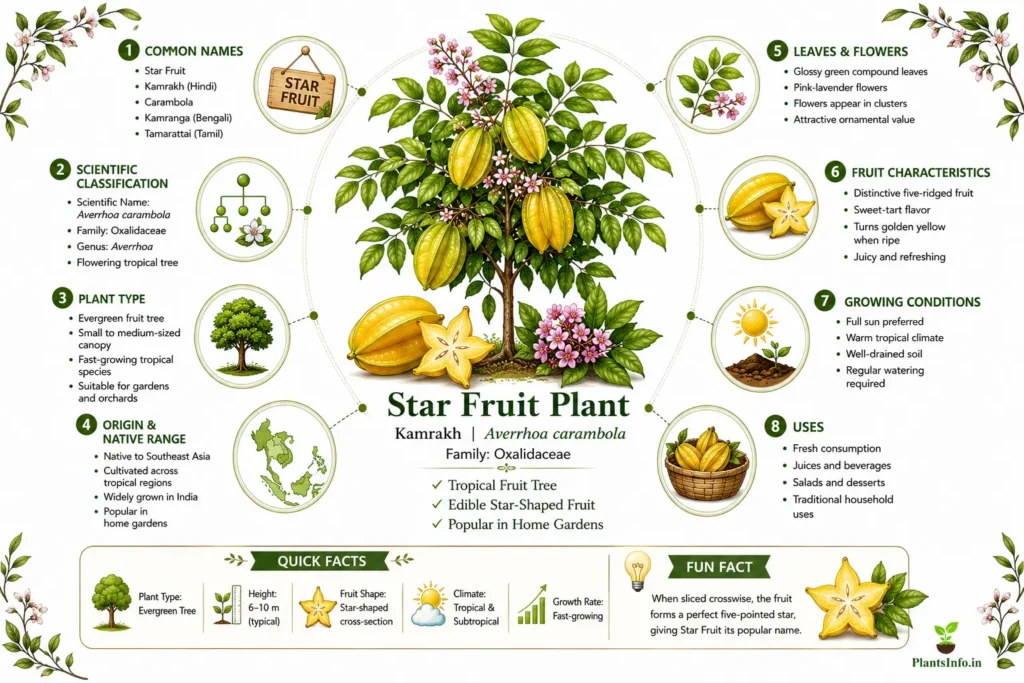
Quick Identification
- Evergreen tropical fruit tree
- Scientific name: Averrhoa carambola
- Family: Oxalidaceae
- Fruit shape: Five-ribbed, star-shaped when sliced
- Flower colour: Pink to lavender
- Mature height: Typically 3–6 m in home gardens
- Native region: Tropical Southeast Asia
- Main use: Fresh fruit, souring agent, pickles, ornamental tree

Names in Different Languages
| Language | Name |
|---|---|
| English | Star fruit, carambola |
| Hindi | Kamrakh, kamarakh |
| Bengali | Kamranga |
| Tamil | Thambaratham, star palam |
| Telugu | Anapakaya, star fruit chettu |
| Marathi | Kamarakh |
| Kannada | Karmbal |
| Malayalam | Chaturappuli, starfruit |
| Gujarati | Kamrakh |
| Punjabi | Kamrakh |
| Scientific name | Averrhoa carambola L. |
| Family | Oxalidaceae |
Most searched name: “Kamrakh” dominates Hindi-language searches; “kamranga” is the dominant term in Bengali-speaking regions. In Tamil Nadu, “star palam” is increasingly common alongside the traditional name.
What Does It Look Like?
Star fruit is a medium-sized tree reaching 5–12 metres at maturity in open ground, with a spreading, slightly drooping canopy that makes it easy to identify even at a distance. The leaves are compound, with 5–11 oval leaflets arranged alternately along each stem; they are dark green above and pale green below. The leaflets often fold partially in response to darkness, disturbance, or environmental stress, although the movement is less dramatic than that of the sensitive plant (Mimosa pudica).
Flowers are small, star-shaped, and pale pink to lavender in colour, appearing in clusters directly on the branches and even on the older woody trunk — a growth habit called cauliflory, which star fruit shares with jackfruit and cacao. Each flower is barely a centimetre across, but the clusters are dense enough to make the tree genuinely ornamental when in bloom.
The fruit is the defining feature: oblong, typically 7–12 cm long, with five prominent longitudinal ribs. Sliced crosswise, the cross-section is a five-pointed star. Unripe fruit is green and sharply sour; fully ripe fruit is golden yellow, waxy in appearance, and ranges from tart to mildly sweet depending on the variety. The flesh is translucent, crisp, and juicy with no central stone — the entire fruit is edible, skin and all.
Where Does It Grow in India?
Star fruit is not native to India. Star fruit is believed to have originated in tropical Southeast Asia, most likely within the region encompassing present-day Malaysia, Indonesia, and surrounding areas — and reached India via trade and Portuguese colonial introduction, most likely through the western coast and Bengal. It is now naturalised and widely cultivated across the tropical belt.
The heaviest cultivation and wild-growing populations are found in West Bengal, Kerala, Tamil Nadu, Andhra Pradesh, Telangana, Karnataka, Goa, Maharashtra’s Konkan coast, Assam, and the other northeastern states. It grows from sea level up to approximately 1,200 metres altitude — making it unsuitable for true hill station conditions such as Shimla or Darjeeling, but viable in the foothills of the Nilgiris and the lower Himalayas.
In urban India, it is found as a garden and compound tree far more than as a commercial orchard crop. Although production remains relatively small compared with major tropical fruit crops such as mango, banana, and guava. The fruit’s short shelf life makes large-scale logistics difficult without refrigerated supply chains. Most kamrakh consumed in India is grown in home gardens and local farms and sold in wet markets rather than supermarkets.
The tree favours a humid tropical climate with well-distributed rainfall of 1,500–2,500 mm annually. It handles brief dry spells better than prolonged waterlogging, which disqualifies it from heavy clay flatlands without drainage improvement.
What Is It Used For?
Star fruit serves multiple roles across Indian households and regional cuisines.
Fresh eating: Ripe sweet varieties are eaten out of hand; sour varieties are sliced and eaten with salt and spices across West Bengal and Odisha.
Cooking and souring: The fruit is used as a souring agent in curries, dals, and fish preparations in Kerala, Andhra Pradesh, and the Northeast — an alternative to tamarind with a cleaner, lighter acidity.
Pickling and preserving: Raw green fruit is pickled in mustard, salt, and oil in Andhra Pradesh and Odisha and sun-dried for use as a year-round condiment.
Traditional medicine: The fruit, juice, and leaves are used in folk remedies for minor fevers, digestive complaints, and skin irritations across South India — for medicinal details, see the Star Fruit Benefits Guide.
Ornamental use: The drooping canopy, cauliflorous flowering habit, and visually distinctive fruit make it a valued garden tree beyond its culinary function.
Is It Easy to Grow?
For gardeners in tropical and subtropical India, star fruit is a moderate-difficulty tree. It is less demanding than mango in terms of pest management and less temperamental than guava in fruiting consistency, but it has one non-negotiable requirement — good drainage. In gardens and states where this condition is met naturally or can be engineered, the tree is straightforward. In waterlogging-prone areas, raised bed preparation and seasonal vigilance. Container growing is viable in most Indian climates with some additional care during the monsoon. For full growing details, see the Star Fruit Growing Guide.
⚠ Special Flags
Important Notes
Kidney Safety
Star fruit contains caramboxin and oxalates that may accumulate in individuals with impaired kidney function. People with chronic kidney disease, kidney failure, or those undergoing dialysis should avoid consuming star fruit unless specifically advised otherwise by a qualified healthcare professional.
Invasive Status
Star fruit is not generally considered invasive in India and does not typically spread aggressively beyond cultivation.
Similar Species
The species most commonly confused with star fruit is bilimbi (Averrhoa bilimbi), a closely related tree bearing cylindrical, highly acidic fruits rather than the characteristic star-shaped fruit of Averrhoa carambola.
Frequently Asked Questions
Is the skin of star fruit safe to eat?
Yes — the skin of ripe star fruit is fully edible and does not need to be peeled. It is thin, smooth, and carries the same flavour as the flesh.
Can star fruit be grown in North India?
It can be grown across the Indo-Gangetic plains and the Deccan in areas without hard frost. Young trees need winter protection below 5°C; established trees tolerate mild cold spells but may drop leaves temporarily.
Are kamrakh and carambola the same fruit?
Yes — kamrakh (Hindi), kamranga (Bengali), and carambola (the international English name) all refer to the same species, Averrhoa carambola.
Whether grown for its distinctive fruit, ornamental beauty, or culinary versatility, star fruit remains one of the most interesting tropical fruit trees available to Indian gardeners. Its unusual appearance may attract attention first, but its productivity, adaptability, and cultural significance are what make it worth growing and preserving.