Hibiscus Varieties in India: 4 Cultivars Compared
Quick Answer
For an Indian home gardener, available space is a practical starting point for choosing a Hibiscus cultivar. The four documented Indian selections discussed here differ in growth habit, plant size, flower characteristics and breeding history. Comparing these characteristics helps match a cultivar to the intended growing space and ornamental purpose.
See also: Hibiscus Plant plant profile, how to grow it, common problems, seasonal care, and its flowering season.
Introduction
The familiar red garden Hibiscus represents only a small part of the diversity found in Indian collections and breeding programmes. Several named selections have been developed or documented by Indian horticultural institutions.
Recommended Products
Disclosure: As an Amazon Associate, PlantsInfo may earn from qualifying purchases.
🌱 Growing Essentials
The following products can help with container gardening, potting, root development, soil management, and healthy plant growth.
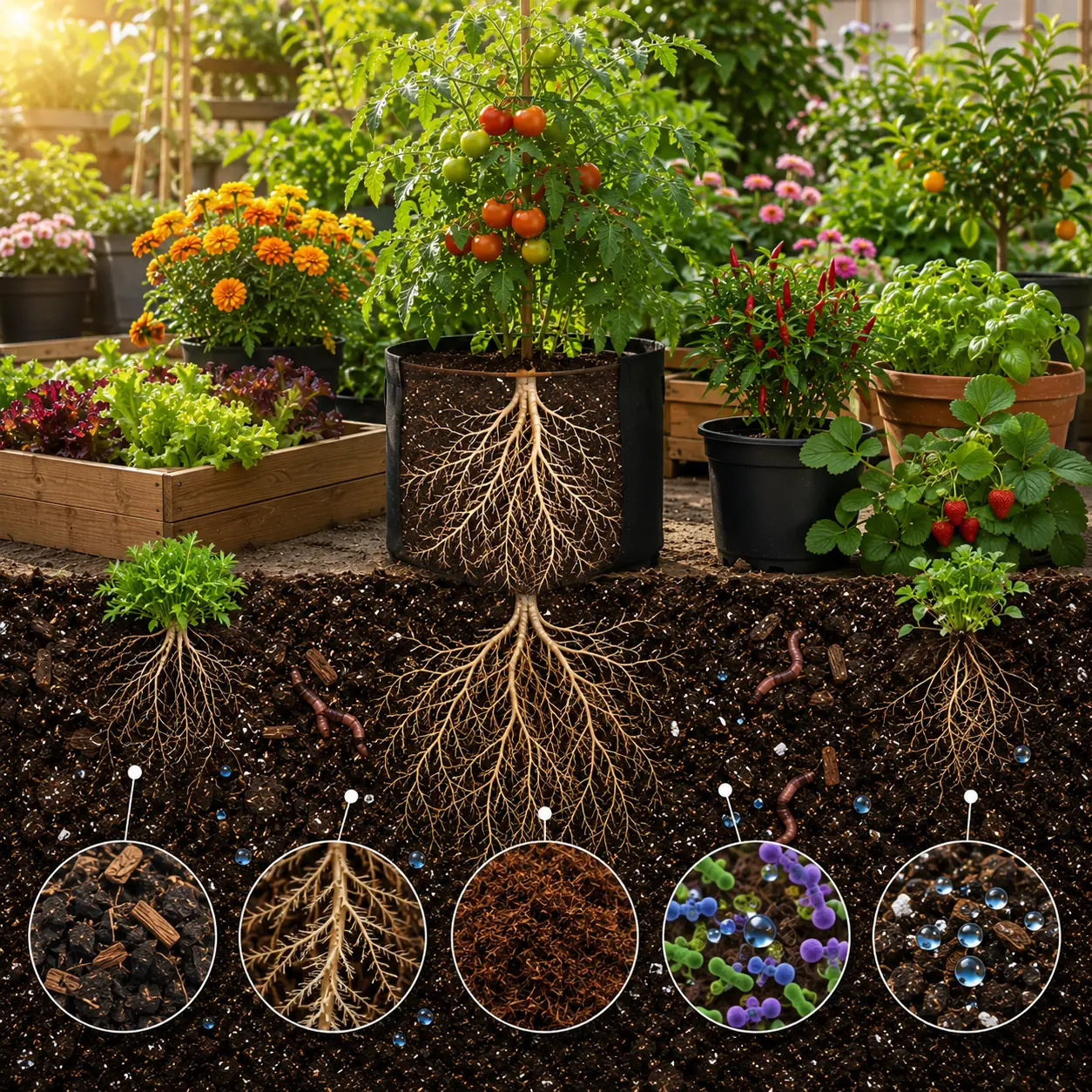
Organic Potting Soil Mix
Provides nutrients, structure, and healthy growing conditions for container plants.
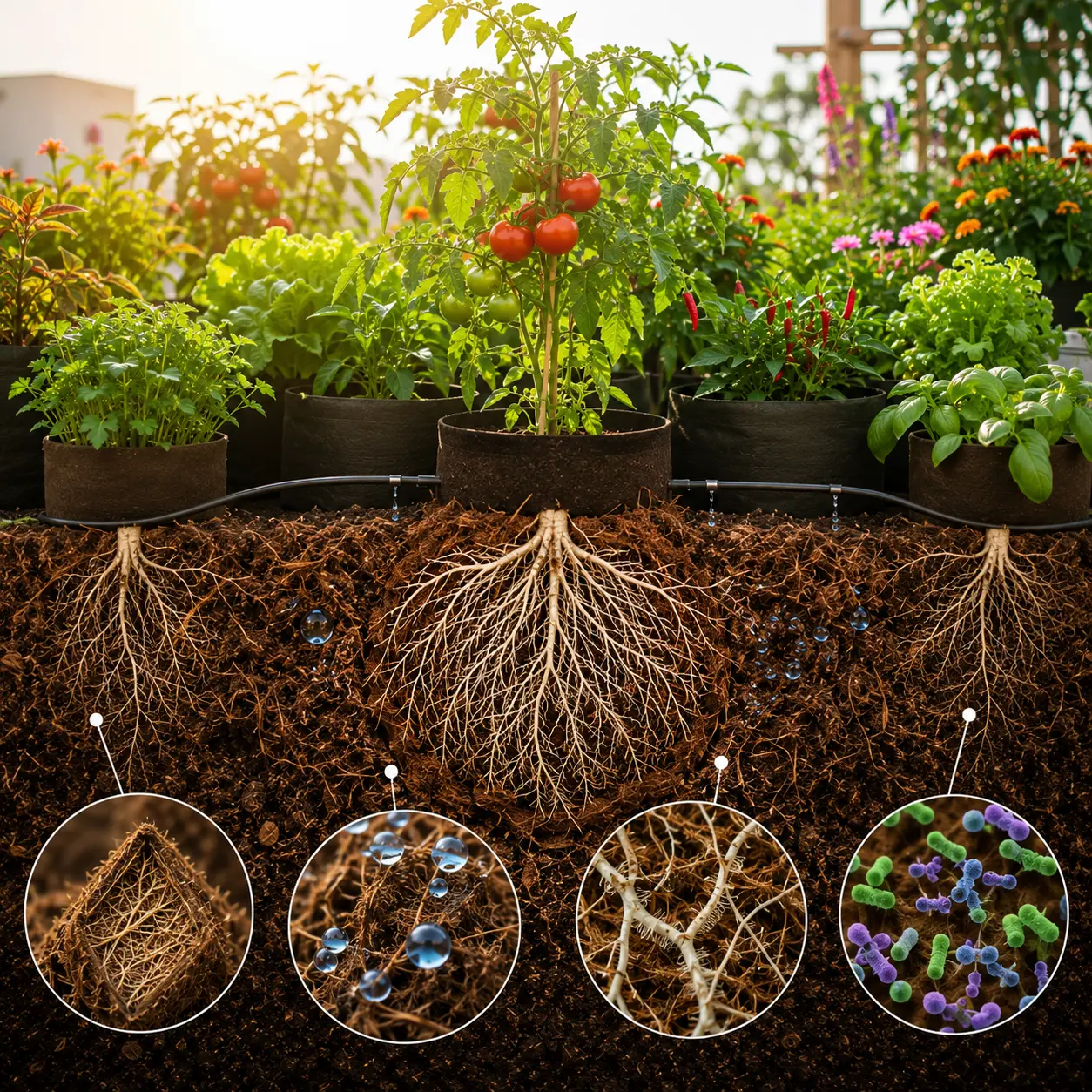
Coco Peat Growing Medium
Enhances moisture retention while maintaining excellent root-zone aeration.

Grow Bags for Plants
Improve drainage, root aeration, and vegetable production in limited spaces.

Plastic Pots for Plants
Ideal containers for seedlings, ornamentals, herbs, and balcony gardens.
This guide compares four such selections: CO 1 (Thilagam), CO 2 (Punnagai), Nameeta and Acharya Jagadish Chandra Bose. It focuses on their documented characteristics, development history, space requirements, and regional associations rather than attempting to rank all Hibiscus cultivars available in India.
Quick Variety Selector
| Cultivar | Classification or Origin | Reported Plant Size | Documented Distinction | Institutional or Regional Association |
|---|---|---|---|---|
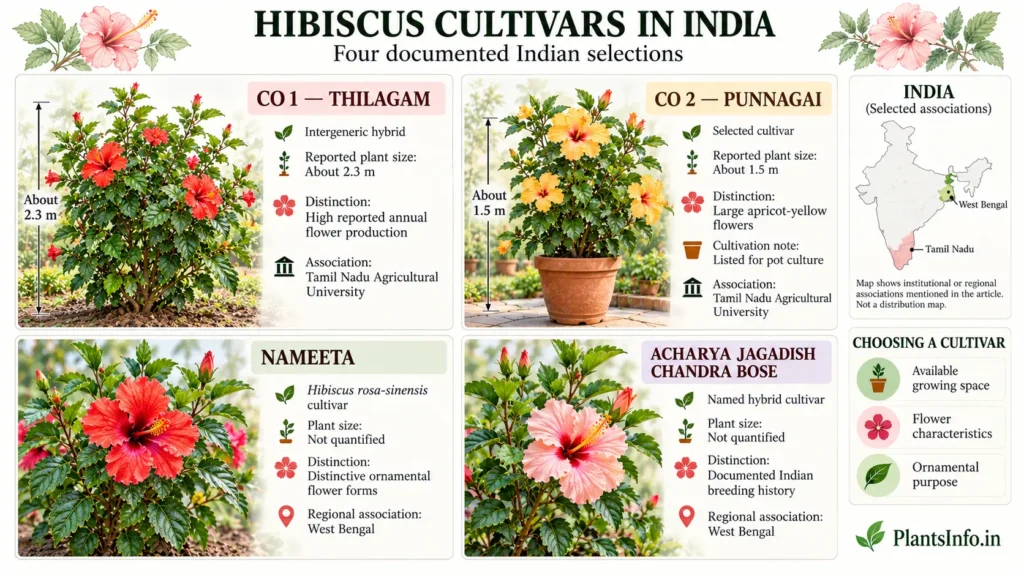
| CO 1 (Thilagam) | Intergeneric hybrid | About 2.3 m | High reported annual flower production | Tamil Nadu Agricultural University |
| CO 2 (Punnagai) | Selected cultivar | About 1.5 m | Large apricot-yellow flowers; listed for pot culture | Tamil Nadu Agricultural University |
| Nameeta | Hibiscus rosa-sinensis cultivar | Not quantified | Distinctive ornamental flower forms | West Bengal |
| Acharya Jagadish Chandra Bose | Named hybrid cultivar | Not quantified | Documented Indian breeding history | West Bengal |
These four are documented Indian selections rather than a complete list of Hibiscus cultivars grown or maintained in India. Indian breeding programmes and botanical collections contain many additional named forms and hybrids.
Selection note: The regional associations in this table refer primarily to documented institutional or breeding origins. They should not be interpreted as proof of exclusive regional suitability or superior performance in those locations.
Varieties in Detail
CO 1 (Thilagam)
CO 1 was released by Tamil Nadu Agricultural University in 1981. It is an intergeneric hybrid involving Hibiscus rosa-sinensis and Malvaviscus arboreus.
The cultivar forms an erect woody shrub reaching approximately 2.3 m. Its flowers are double and carmine-red, with numerous petals.
Tamil Nadu Agricultural University reports approximately 3,055 flowers per plant annually and lists CO 1 for specimen planting, foundation planting, and pot culture.
Its principal documented distinction is its reported annual flower production. The relatively tall, upright growth habit makes mature plant size an important consideration when selecting a planting location.
CO 2 (Punnagai)
CO 2 was released by Tamil Nadu Agricultural University in 1981 after selection from open-pollinated seedlings of the cultivar Chandrika.
It has a semi-spreading growth habit and reaches approximately 1.5 m. Its flowers are large, approximately 14 cm across, with an apricot-yellow colour and red throat.
Tamil Nadu Agricultural University reports approximately 988 flowers per plant annually and lists CO 2 for specimen planting and pot culture.
Its documented characteristics combine moderate plant stature with large, distinctive flowers. Compared with CO 1, its reported height is lower, making it a more space-conscious candidate between these two institutional selections.
For container cultivation, the final choice should still account for container dimensions, available light, mature spread and maintenance requirements.
Nameeta
‘Nameeta’ is a Hibiscus rosa-sinensis cultivar developed at the Acharya Jagadish Chandra Bose Indian Botanic Garden in West Bengal. It was produced by crossing ‘Mother’s Touch Singur’ with ‘Durga’.
The published description records an upright, fast-growing shrub and distinctive ornamental flower characteristics, including ruffled and tufted forms, a velvety brown ring, and a reddish eye zone.
Its documented distinction is its ornamental appearance rather than a quantified flower-production advantage.
The available description does not establish a reliable numerical comparison with CO 1 or CO 2 for plant size, annual flower production, or space efficiency. These characteristics should therefore not be inferred from its ornamental description alone.
Acharya Jagadish Chandra Bose
This cultivar was developed in West Bengal by hybridising ‘Valentine’s Day’ as the female parent with ‘Moorea Memory of July’ as the male parent. It was subsequently named after the Indian scientist Acharya Jagadish Chandra Bose.
Its documented significance lies in its Indian breeding history and ornamental character.
The available development account does not establish a reliable flower-yield or space-efficiency advantage over the TNAU selections. Its mature dimensions and comparative performance should not be assumed without additional cultivar-specific evidence.
CO 1 vs CO 2: Flower Production and Plant Size
CO 1 and CO 2 provide the clearest quantitative comparison among the four selections because their institutional descriptions include reported plant heights and annual flower counts.
| Characteristic | CO 1 (Thilagam) | CO 2 (Punnagai) |
|---|---|---|
| Reported height | About 2.3 m | About 1.5 m |
| Growth habit | Erect | Semi-spreading |
| Flower colour | Carmine-red | Apricot-yellow with red throat |
| Flower form | Double | Large flowers |
| Reported annual flower count | About 3,055 | About 988 |
| Documented uses | Specimen, foundation and pot culture | Specimen and pot culture |
Flower Production
CO 1 has the higher reported annual flower count, at approximately 3,055 flowers per plant compared with approximately 988 for CO 2.
These are reported institutional figures, not guaranteed production levels for every garden. Their direct comparison should also be interpreted in the context of the original evaluation conditions.
Plant Size
CO 2 has the lower reported height, approximately 1.5 m compared with approximately 2.3 m for CO 1.
This makes CO 2 the more space-conscious documented selection between the two, although its semi-spreading habit means that lateral room must also be considered.
Neither height nor reported flower production alone establishes universal superiority. The relevant selection depends on the intended use, growing space, and local conditions.
How to Choose for Your Space
Container or Terrace Garden
CO 2 is a documented candidate for container cultivation and has a reported height of approximately 1.5 m. Its semi-spreading habit and listed pot-culture use make it relevant when comparing the two TNAU selections.
Before purchasing, consider:
- The expected mature width as well as height.
- Container volume and drainage.
- Available sunlight.
- Space for routine maintenance.
- Whether the plant can be accommodated as it matures.
The institutional pot-culture listing does not establish suitability for every small balcony or container size.
Small Ground Plot
CO 2 is the more space-conscious documented choice between CO 1 and CO 2 because of its lower reported height.
However, a small planting area should be assessed according to mature spread, plant spacing, access for maintenance, and the intended planting density.
Where mature dimensions are unavailable for a named cultivar, avoid assuming that its current nursery size represents its eventual space requirements.
Larger Garden or Backyard
CO 1 is a documented option where high reported annual flower production is an important selection consideration and sufficient space is available for its upright growth.
Its institutional listing for specimen and foundation planting provides additional context for its intended ornamental uses.
Nameeta and Acharya Jagadish Chandra Bose may also be considered for their documented ornamental characteristics, but their comparative space requirements are not sufficiently quantified in the descriptions used here.
Regional Suitability in India
Regional suitability should be distinguished from breeding or institutional origin. The documented histories of these cultivars identify where they were developed or released, but do not establish that they are restricted to those regions or perform better there than elsewhere.
South India
CO 1 and CO 2 have documented associations with Tamil Nadu Agricultural University and tropical South Indian horticulture.
Their recorded characteristics provide a basis for selection, but performance in a particular location will depend on local growing conditions and cultivar management.
West Bengal and Eastern India
Nameeta and Acharya Jagadish Chandra Bose have documented development histories associated with the Acharya Jagadish Chandra Bose Indian Botanic Garden in West Bengal.
This establishes their breeding provenance, not exclusive suitability throughout eastern India.
North India
The available cultivar-specific comparative information does not establish sufficient evidence to recommend one of these four selections over another for North Indian conditions.
Hill Stations and High-Altitude Areas
The available descriptions do not establish reliable comparative performance for hill stations or high-altitude environments. Selection for these locations requires additional evidence about local cultivation and environmental tolerance.
Where to Source These Varieties in India
For a named Hibiscus cultivar, consider established state horticulture or agricultural-university channels, botanical-garden collections, and nurseries that provide cultivar-level identification.
Before purchasing, verify:
- The exact cultivar name and spelling.
- Whether the nursery can substantiate the plant’s identity.
- Whether it is a rooted cutting or grafted specimen.
- Mature height and spread, where documented.
- Whether the nursery has experience growing the cultivar under comparable regional conditions.
A generic “Hibiscus” or “hybrid Hibiscus” label does not establish the identity of a particular cultivar. Visual similarity among flowers can make identification difficult when plants are sold without reliable names or provenance.
Selection Summary
| Gardening Requirement | Relevant Documented Selection | Consideration |
|---|---|---|
| Higher reported annual flower production | CO 1 | Larger reported height; institutional production figure |
| Lower reported height among the two TNAU selections | CO 2 | Semi-spreading growth; assess mature width |
| Pot culture among the TNAU selections | CO 2 | Listed for pot culture; container dimensions still matter |
| Distinctive ornamental flower characteristics | Nameeta | Comparative yield and size not quantified |
| Indian breeding history associated with West Bengal | Acharya Jagadish Chandra Bose | Comparative performance not established |
These are evidence-based selection considerations, not a universal ranking of the four cultivars.
Conclusion
Choose a Hibiscus cultivar by matching its documented characteristics, mature growth habit, and intended ornamental use to your available space. Where comparative performance data are unavailable, verify cultivar identity and local growing experience before purchase.